








How to Prepare Kava Root Powder the Traditional Way
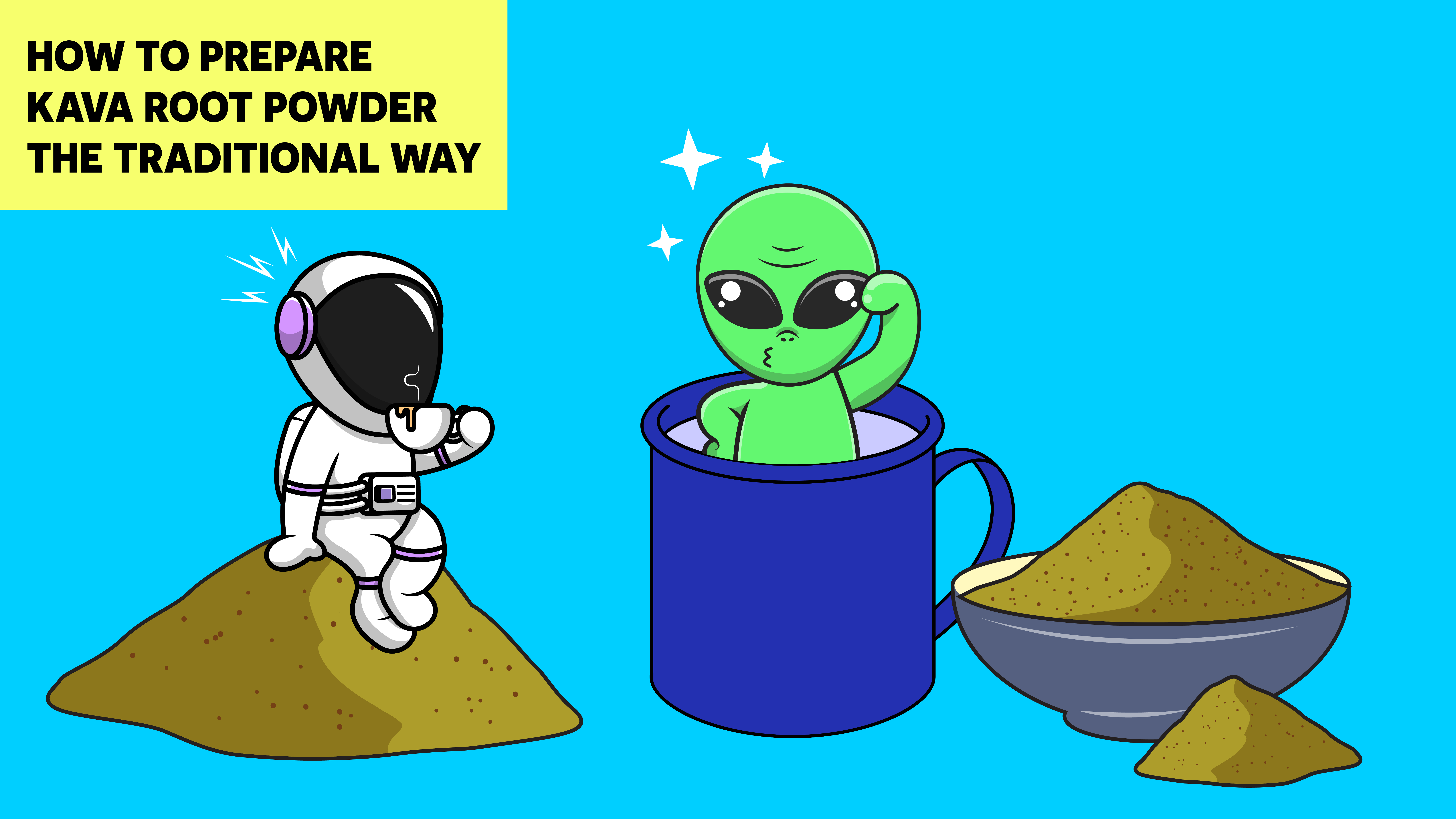
How to prepare kava the traditional way comes down to four steps: put ground kava root in a fine strainer bag, submerge it in cool water, knead and squeeze the bag for several minutes, then wring it out. The strained liquid is the drink. No heat or blender is needed.
For the amount of powder and water, follow your product label. Prefer something ready to drink? Our kava shots and tonics are pre-made, with ingredients on each label. Kava products are for adults 21 and over. New to kava? Our guide to what kava drinks are and how they feel covers the basics.
Below: each step, micronized vs instant kava, noble vs tudei kava, mixers and storage.
What you need to make kava: strainer bag, water and a bowl
Traditional kava needs only a fine-mesh strainer bag or cloth, a large bowl, cool or room-temperature water, and ground kava root. A cup or coconut shell for serving is traditional but optional. Hawaii’s Department of Health describes the customary drink as noble kava root mixed with water or coconut water.
| Item | Purpose | Notes |
|---|---|---|
| Ground kava root (traditional grind) | The raw material | Check the label for the variety (noble) and the part of the plant used |
| Fine-mesh strainer bag or cloth | Holds the root fibers while the liquid passes through | Nylon kava bags, muslin or a nut-milk bag all work |
| Large bowl | For kneading and collecting the liquid | In Fiji, kava is mixed in a wooden bowl called a tanoa |
| Cool or room-temperature water | The extraction liquid | Traditional preparation uses cold water; hot water is not used |
| Serving cup or shell | For drinking | Fijians call the cup a bilo |
How to prepare kava step by step
To make kava the traditional way, place the powder in the strainer bag, set the bag in a bowl of cool water, and knead it firmly for several minutes. Squeeze the bag hard to push the liquid out, wring it dry, then discard the pulp. The cloudy, brown liquid in the bowl is the drink.
- Measure using the label. Use the powder and water amounts printed on your product. Labels differ by grind and brand.
- Fill the bag. Add the powder to the strainer bag and twist or tie the top closed.
- Submerge. Place the bag in the bowl of cool water and let it soak through.
- Knead. Press, squeeze and fold the bag with your hands under the water. Tourism Fiji describes the powder being mixed with cold water and squeezed a few times.
- Wring it out. Lift the bag and twist it to press out the last liquid.
- Stir and serve. Give the bowl a stir before pouring each cup, since root sediment sinks to the bottom.
Historical Hawaiian accounts, summarized by the Hawaii Department of Health, describe the root mash being mixed with water, kneaded by hand, stirred and then strained. Earlier generations chewed the root before mixing; grinding and pounding later replaced chewing.
How long to knead is a matter of practice. A 2024 test by kava company Root and Pestle, published on the Kava Society blog, found most extractable kavalactones came out in the first five-minute squeeze, with each later wash yielding a weaker liquid. That study was not peer reviewed.
How to make kava tea: does hot water work?
Traditional kava is not brewed like tea. It is a cold-water extraction, made by kneading the root in cool or room-temperature water. The FDA’s 2020 literature review describes traditional kava as macerated root combined with cold water or coconut milk.
Some packaged kava tea bags are meant for hot water; follow the box directions for those. For traditional ground root, keep the water cool.
Micronized vs traditional kava: does preparation differ?
Yes. Traditional grind kava contains coarse root fiber and must be kneaded and strained. Micronized kava is ground much more finely and instant kava is made from dried extracted root, so both are stirred or shaken into water with no strainer bag. Each still has its own label directions.
Tasting Table describes four common forms: traditional ground root, instant, micronized and liquid extract. Traditional grind is what most kava bars serve.
Noble kava vs tudei kava
Noble and tudei (two-day) are categories of kava varieties. Vanuatu’s Kava Act of 2002 lists noble varieties and two-day varieties in separate schedules, and it restricts the export of two-day kava from Vanuatu.
Hawaii’s 2024 GRAS determination covers only the noble variety of kava root, prepared with water or coconut water in the customary way. When you shop, look for a label that names a noble variety and states that it is made from the root.
What is best to mix kava with?
Traditional kava is mixed with water alone, and coconut water is the main traditional alternative. Kava bars often serve fruit chasers such as pineapple or orange. The FDA’s 2020 review notes coconut milk as a traditional base too. Kava should not be mixed with alcohol.
Hawaii’s Department of Health recommends that kava not be consumed with alcohol. California’s Department of Public Health cites an NIH warning about increased liver risk when kava and alcohol are combined.
How to store kava powder
Keep dry kava powder in a sealed, airtight container away from heat, light and moisture, and check the best-by date on the package. Prepared kava is a fresh drink, so make only what you plan to drink and follow the label for any storage of leftovers.
Reading the label also tells you what you are buying. Our guides to reading a lab report and what is actually in your product explain how to check a certificate of analysis.
Kava safety: the FDA consumer advisory
On March 25, 2002, the FDA advised consumers that kava-containing dietary supplements may be associated with severe liver injury. It called liver damage rare and urged people with liver disease, or who take medicines that affect the liver, to talk with a doctor first.
In a 2020 review, FDA scientists concluded there was no basis to treat kava as generally recognized as safe as an ingredient in conventional foods. The NIH also lists digestive upset, headache and dizziness as possible side effects. For more detail, see our overview of kava uses and side effects.
Frequently Asked Questions
How do I prepare and drink kava?
Knead ground kava root in a strainer bag submerged in cool water, wring it out, and drink the strained liquid. In Fiji, the drink is served in a cup called a bilo. Follow your product label for amounts.
How do you prepare kava kava?
Kava kava is another name for kava (Piper methysticum). It is prepared the same way: cool water, a strainer bag, kneading and straining. Micronized and instant forms are stirred into water instead.
Is kava harder on the liver than alcohol?
There is no direct comparison from FDA. The FDA’s 2002 advisory linked kava supplements to rare but severe liver injury, and health agencies advise against combining kava with alcohol. People with liver concerns should talk with a doctor.
Can you drink kava root powder without straining it?
Traditional ground kava root is fibrous and is meant to be strained, not swallowed. Drinking the leftover pulp can be gritty and hard on the stomach. Micronized and instant kava are made to be stirred into water and drunk as is.
How much kava root powder should I use?
Follow the label on your product. Kava strength varies by cultivar, grind and brand, so serving sizes are not the same from one powder to the next. Start low if you are new to kava.
How do you make kava without a strainer bag?
You need a very fine cloth. Cheesecloth folded several times or a nut milk bag can work. A kitchen sieve is usually too coarse and lets root particles through.
How do you make kava taste better?
Kava has an earthy, bitter taste. Many people drink it quickly and follow with a chaser like pineapple or mango, or mix it with coconut milk. Drinking it cold also helps.
Will kava show up on a drug test?
Standard workplace drug panels are not designed to detect kava. We cover the details in does kava show up on a drug test.
This article is general information, not medical advice. Always follow the directions on your product label, and talk with a doctor before using kava if you are pregnant, have liver problems or take prescription medicines.
Sources
- Kava (NIH Office of Dietary Supplements), referencing the FDA consumer advisory of March 25, 2002
- Review of the published literature pertaining to the safety of Kava for use in conventional foods (FDA memorandum, August 11, 2020)
- GRAS Determination for ‘Awa (Hawaii Department of Health, January 2024)
- Kava Act No. 7 of 2002 (Republic of Vanuatu, via PacLII)
- Consumer Facts: Kava (California Department of Public Health)
- Kava: Usefulness and Safety (NIH NCCIH)
- Guide to Drinking Kava in Fiji (Tourism Fiji)
- How Kava Is Made (Tasting Table, May 12, 2025)
- Kneading kava? The science behind efficient traditional kava preparation (Kava Society, July 29, 2024)