



Does Kava Show Up on a Drug Test? How Long Does Kava Stay in Your System?
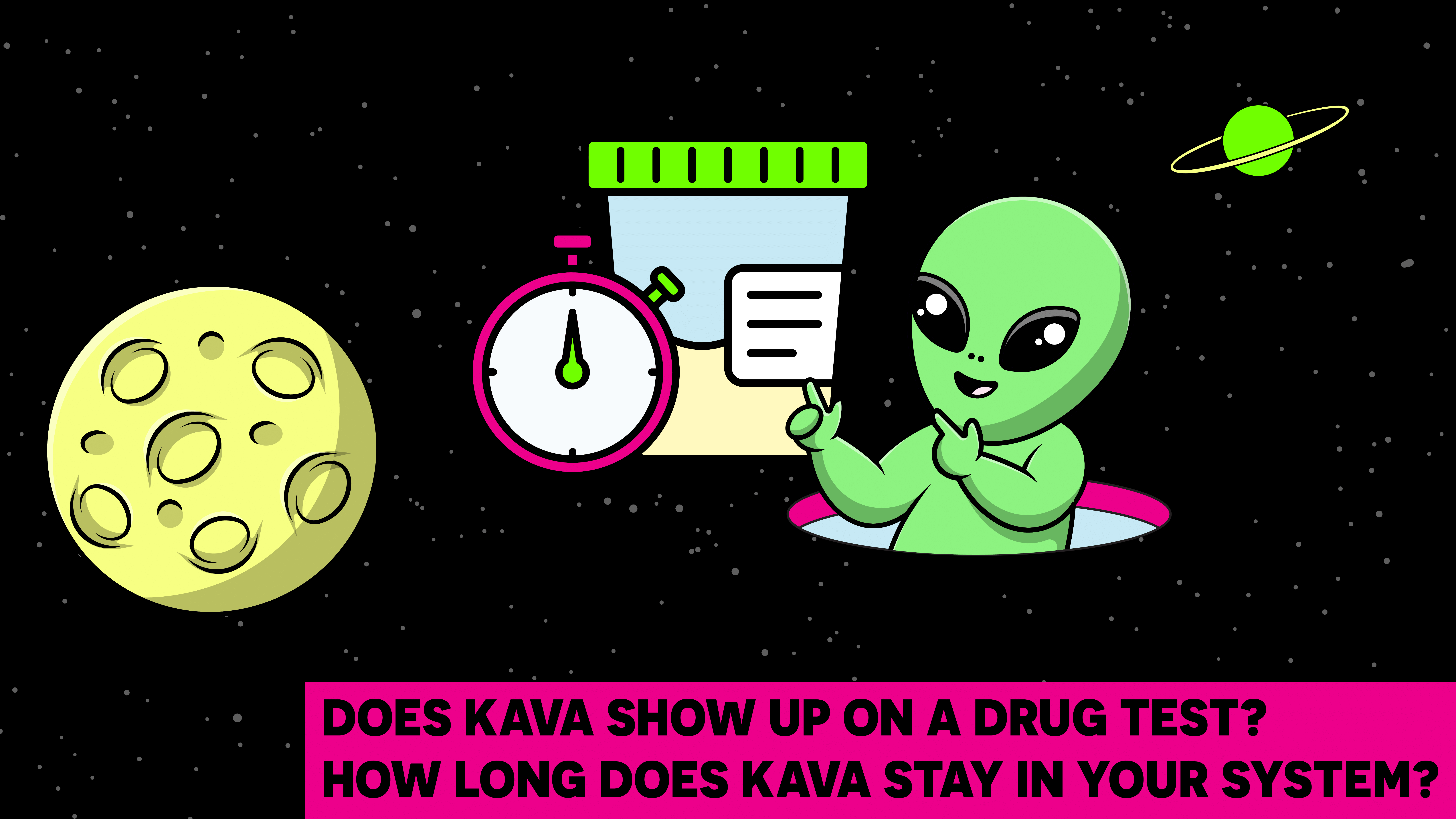
Kava is not part of the standard 5, 10 or 12 panel drug tests used by employers, and federal DOT rules do not allow labs to test DOT specimens for it. So how long does kava stay in your system? There is no official detection window, because routine panels do not look for it.
Products in our kava shots and tonics collection list their ingredients on each label. Kava’s own compounds, called kavalactones, are measurable: specialized lab methods can find them in urine, and one study linked kavain to false-positive amphetamine screens that confirmation testing ruled out.
Below: what common panels screen for, what research says, and the FDA advisory on kava and the liver.
Does kava show up on a standard drug test?
No. Standard workplace drug tests screen for a fixed list of drug classes: marijuana, cocaine, amphetamines, opioids and PCP, plus extra classes on expanded panels. Kava and kavalactones are not on the federal panel, the DOT panel or the common 10 panel lists published by testing providers.
A drug test only reports what it is built to detect. Kava is a South Pacific plant in the pepper family and is not a federally controlled substance, so it is not on the lists labs run by default.
Two caveats matter. Panels are not identical across labs, and an employer can order extra tests. Kava has also been linked to a false-positive screening result in one study, covered below.
What do 5, 10 and 12 panel drug tests screen for?
A 5 panel test covers marijuana, cocaine, amphetamines, opiates and PCP. A 10 panel adds benzodiazepines, barbiturates, methadone, propoxyphene and methaqualone. A 12 panel is not a fixed standard; it usually adds drugs such as fentanyl, tramadol or ketamine. None of these lists includes kava.
| Panel | What it typically screens for | Includes kava? |
|---|---|---|
| Federal HHS/SAMHSA panel (urine and oral fluid) | Marijuana, cocaine, opiates and opioids (including fentanyl since July 7, 2025), PCP, amphetamines including MDMA and MDA | No |
| DOT panel (49 CFR 40.85) | Marijuana metabolites, cocaine metabolites, amphetamines, opioids, PCP | No; labs may not test DOT specimens for other substances |
| Standard 5 panel | Cocaine, marijuana, PCP, amphetamines, opiates | No |
| Standard 10 panel | The 5 panel plus benzodiazepines, barbiturates, methadone, propoxyphene, methaqualone | No |
| 12 panel (varies by lab) | A 9 or 10 panel plus drugs the employer selects, such as fentanyl, tramadol, buprenorphine or ketamine | Not in common configurations |
National Drug Screening, a testing provider, notes that panels can differ between certified labs depending on how the employer orders them. The employer or lab can tell you what a specific test covers.
Can kava cause a false positive on a drug test?
Possibly, on a screening test. A study published online in 2020 in the Journal of Analytical Toxicology described three people whose urine screened positive for amphetamines on an immunoassay. Kavain, a kavalactone, was found in all three samples, and confirmation testing by GC-MS found no amphetamines.
The researchers then tested kava powders bought from local kava clubs and a pure kavain standard. Both cross-reacted with the same amphetamine immunoassay, and neither contained amphetamine-type compounds. The authors described it as the first report of kavain causing this kind of false positive.
This is one small study with one immunoassay type, so it does not show how often this happens with other kits. It does show why labs confirm a positive screen with a more specific test.
How long does kava stay in your system?
There is no standard answer to the question “how long does kava stay in your system?” because human elimination data are limited and routine tests do not look for it. In a 2022 clinical study, kavalactones reached peak blood levels 1 to 3 hours after people took a kava extract by mouth.
Animal data offer another clue. In a 2005 rat study published in Drug Metabolism and Disposition, more than 90% of a dose of kawain (kavain) was eliminated within 72 hours, mostly in urine. Rat data do not translate directly to people, so treat this as background, not a detection window.
Kavalactones can be found when a lab looks for them on purpose. The Iowa Division of Criminal Investigation lab reported detecting the kavalactones yangonin and methysticin in urine from suspected impaired-driving cases using LC-MS/MS. The same report noted that kavalactones in stored urine can degrade.
In short, the answer depends on the person, the product and the test, and no agency publishes a detection window for kava.
Kava and DOT or federal workplace testing
DOT-regulated employers must follow 49 CFR Part 40. Section 40.85 lists the drug classes labs test for and bars labs from testing DOT specimens for any other substance. Kava is not on that list.
Federal agencies follow the HHS Mandatory Guidelines. SAMHSA’s January 16, 2025 notice set the authorized urine and oral fluid panels, effective July 7, 2025, and added fentanyl. A March 2026 follow-up notice made no changes to the analytes. Kava is not among them.
Private employers outside DOT rules set their own panels through company policy.
Kava safety: the FDA consumer advisory on liver injury
On March 25, 2002, the FDA issued a consumer advisory that kava-containing dietary supplements may be associated with severe liver injury. It cited more than 25 reports from other countries, including hepatitis, cirrhosis and liver failure, and a US case of a young woman who needed a liver transplant.
The FDA said liver damage appeared to be rare but serious. It advised people with liver disease, or who take medicines that can affect the liver, to talk with a doctor before using kava. Signs it listed include yellowing skin or eyes and brown urine.
The NIH’s National Center for Complementary and Integrative Health also notes that kava can cause digestive upset, headache and dizziness. Kava products sold by Elyxr are for adults 21 and over. Follow the directions on the product label.
Kava vs kratom on drug tests
Kava and kratom are different plants, and they are tested differently. Kratom is not on standard panels either, but labs such as Labcorp offer a dedicated kratom urine test that confirms mitragynine and 7-hydroxymitragynine by LC-MS/MS. We cover that in our guide to kratom and drug tests.
This matters because some products combine the two, such as kava and kratom blend shots, and Bisnow reports many kava bars also sell kratom drinks. Read the full ingredient list. The Feel Free Classic Tonic kava shot, for example, lists kava, kola nut, lion’s mane, rhodiola and caffeine.
The same rule applies to other categories. Our posts on whether THCA stays in your system and whether mushroom gummies show on a drug test explain how ingredients, not product names, drive results.
Frequently Asked Questions
Will I fail a drug test if I drink kava?
Kava is not on standard 5, 10, 12 panel, federal or DOT tests. One study found kavain triggered false-positive amphetamine screens that GC-MS confirmation testing then ruled out. Products that blend kava with kratom or other ingredients can be tested for those ingredients.
Will kava show up on a 12 panel drug test?
Not in common configurations. A 12 panel is usually a 9 or 10 panel plus drugs such as fentanyl, tramadol or ketamine. Because the employer chooses the extra drugs, the lab or employer can confirm what a specific 12 panel covers.
Does kava have drugs in it?
Kava root contains kavalactones, the compounds researchers study in kava. Kava is not a federally controlled substance. Some kava products add other ingredients, such as caffeine or kratom, so check the label before you buy.
How long does kava last, and how long does kava take to kick in?
We do not describe kava’s effects. On the pharmacology side, a 2022 clinical study found kavalactones reached peak blood levels 1 to 3 hours after an oral dose. Human data on how long kavalactones remain in the body are limited.
This article is general information, not medical or legal advice. If you have questions about a specific drug test, ask the employer or testing lab. If you have liver concerns or take prescription medicines, talk with a doctor before using any kava product.
Sources
- Mandatory Guidelines for Federal Workplace Drug Testing Programs: Authorized Testing Panels (HHS/SAMHSA, Federal Register, January 16, 2025)
- Mandatory Guidelines for Federal Workplace Drug Testing Programs: Authorized Testing Panels, footnote update (SAMHSA, March 2026)
- 49 CFR 40.85: What drugs do laboratories test for? (US Department of Transportation)
- Kava (NIH Office of Dietary Supplements), referencing the FDA consumer advisory of March 25, 2002
- Hepatic Toxicity Possibly Associated with Kava-Containing Products (CDC MMWR, November 29, 2002)
- Kavain Interference with Amphetamine Immunoassay (Journal of Analytical Toxicology)
- Clinical pharmacokinetics of kavalactones after oral dosing of standardized kava extract in healthy volunteers (Journal of Ethnopharmacology, 2022)
- Pharmacokinetics and disposition of the kavalactone kawain (Drug Metabolism and Disposition, 2005)
- Kava Impairment in Drivers (Iowa DCI Criminalistics Laboratory, AAFS 2019)
- Kava: Usefulness and Safety (NIH NCCIH)
- Kratom (Mitragynine), Screen and Confirmation, Urine (Labcorp)
- Employer Drug Testing Panels (National Drug Screening)
- Kava Bars Are Booming. Kratom Is A Big Reason Why (Bisnow, September 30, 2026)