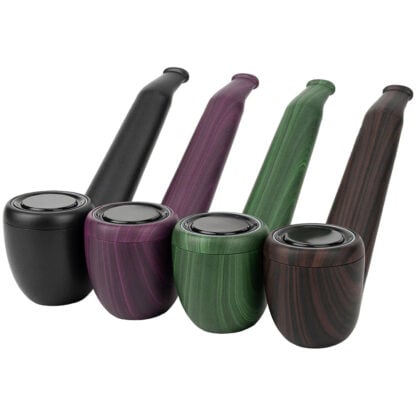
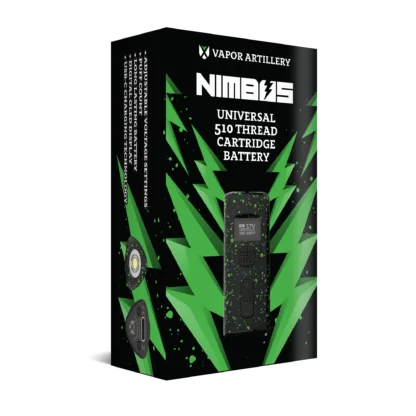
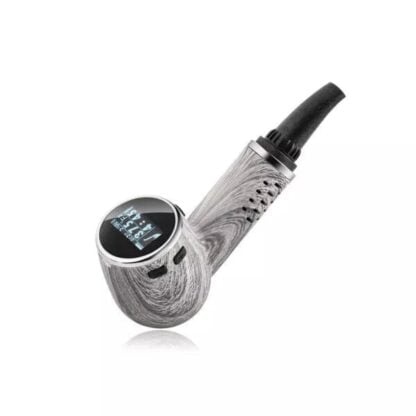
Hardware covers everything in the catalog that holds, heats or stores something else. Batteries and 510 cartridges, glass pieces, grinders, rolling supplies and cases. None of it contains cannabinoids, kratom alkaloids or Amanita compounds, so none of the botanical rules that govern our other collections apply here. What matters on this page is fit, build quality and electrical safety. The guide below covers threading, coil resistance, airflow and charging, because those four things decide whether a setup works or disappoints.
What Counts as Hardware, and Why This Page Reads Differently
Every other collection on this site carries something you consume. This one does not. A grinder, a bong, an empty cartridge and a 510 battery are all accessories, and they contain no active compound of any kind.
That changes the whole frame. There is no certificate of analysis for a glass bowl. There is no total THC calculation on a grinder. The hemp definition changes coming in late 2026 do not reach any product on this page, because those rules govern cannabinoid content and there is no cannabinoid content here to govern.
What replaces all of that is ordinary product judgment. Does it fit what you already own, is the material sound, and is the electronics side built properly. Age restrictions still apply at 21 and over, and a handful of states and cities restrict the sale of certain smoking accessories, which we apply at checkout.
510 Threading Is a Standard, Not a Guarantee
The 510 thread takes its name from its dimensions: ten threads across five millimeters. It became the de facto connector for cartridges and batteries because the early manufacturers converged on it, not because any standards body published a specification.
That history explains the one problem people actually run into. Two products can both be honestly described as 510 and still sit badly together. The thread pitch matches, but the depth of the center pin, the length of the cartridge base and the width of the battery’s collar all vary between manufacturers. A cart can bottom out before the pin makes contact, or make contact while the threads are still a turn short.
Two habits avoid almost all of it. Check the cartridge diameter against the battery’s opening, since a wide ceramic cart will not seat in a slim pen built for narrow glass. And never force a connection. If it needs pressure, the pin geometry is wrong, and tightening past snug is how center pins get crushed and threads get stripped.
Coil Resistance and Airflow Explain Why Two Carts Behave Differently
Resistance is measured in ohms and it is the number worth understanding. A lower resistance coil draws more current at a given voltage, so it heats faster and hotter. A higher resistance coil heats more slowly and more gently. Most 510 cartridges sit somewhere between 1.0 and 2.0 ohms.
Pair that with the oil it is holding. A thick distillate in a high resistance coil can struggle to wick properly, which is what produces a weak draw followed by a burned one. A thin oil in a low resistance coil can wick faster than it vaporizes and leak from the airway.
Airflow is the third variable and the least discussed. The intake hole size sets how much restriction you feel, and cartridges with larger airways deliver more vapor at the same temperature. None of this is a quality ranking. A restricted, higher resistance setup and an open, lower resistance one are different tools, and people who own both use them for different things.
Glass, Silicone and Metal
Borosilicate glass is the standard for water pieces because it tolerates thermal shock and does not hold flavor between uses. It is also breakable, which is the entire trade-off.
Silicone trades the flavor neutrality for the ability to survive being dropped. It is the right answer for anything that travels. Over a long life, silicone can pick up and retain residue in a way glass does not.
Metal appears mostly in grinders, and the thing to look at is not the body but the teeth and the thread. Diamond-cut aluminum teeth hold their edge longer than stamped ones, and a grinder’s threads are what fail first on a cheap unit.
Battery Safety, Charging and Lifespan
Vape batteries are lithium-ion cells, and they want what all lithium-ion cells want. Charge with the cable supplied or a known-good USB-C source, not whatever fast charger is nearest. Unplug when the indicator says full, because sitting at full charge on a charger accelerates capacity loss. Keep them out of hot cars and off windowsills. Never carry a loose cell in a pocket with keys or coins, since a short across the terminals is the failure mode that actually causes fires.
Capacity in mAh tells you how long a battery runs between charges and nothing about how hard it hits. A 350 mAh pen and a 900 mAh device at the same voltage deliver the same draw; one just does it for longer. If a battery gets hot to the touch, swells, or will not hold a charge past a few draws, stop using it and dispose of it at a battery recycling point rather than in household waste.
Cleaning and Storage
Glass cleans with isopropyl alcohol and coarse salt, agitated and then rinsed thoroughly with water until no smell remains. Let it dry completely before use. Grinders come apart and clean the same way, though the screen and threads need a brush rather than a soak.
Batteries and cartridge connections want a dry cotton swab on the contact point, never liquid. A fouled center pin is behind a large share of batteries that seem dead.
Store cartridges upright. On their side, the oil migrates into the airway and the mouthpiece, which is messy and wastes product. Store everything out of reach of children and pets.
FAQ's
Will any 510 cartridge fit any 510 battery?
Usually, but not always. The thread pitch is consistent, while center pin depth, base length and cartridge diameter vary between manufacturers. A wide ceramic cartridge may not seat in a slim pen. Check the diameter against the battery opening, and never force a connection, since forcing one is how center pins and threads get damaged.
What does the ohm rating on a cartridge mean?
It is electrical resistance. Lower resistance draws more current at a given voltage, so the coil heats faster and hotter; higher resistance heats more slowly. Most 510 cartridges fall between 1.0 and 2.0 ohms. It interacts with oil thickness, which is why the same cartridge can perform differently on two batteries.
Do the 2026 hemp law changes affect anything on this page?
No. Those changes govern how cannabinoid content is measured and capped, and nothing in this collection contains any cannabinoid. A battery, a grinder and an empty cartridge are accessories. The dates that matter on our THCA and Delta-9 collections have no application here.
Does a higher mAh battery hit harder?
No. Capacity in mAh is runtime between charges, not output. A 350 mAh and a 900 mAh device at the same voltage produce the same draw, and the larger one simply lasts longer. Output is set by voltage and by the coil’s resistance, not by capacity.
How should I charge a vape battery?
Use the supplied cable or a known-good USB-C source rather than a high-output fast charger. Unplug once the indicator reads full, since sitting on a charger at full accelerates capacity loss. Keep batteries out of hot cars and never carry a loose cell alongside keys or coins.
Glass or silicone?
Glass if flavor neutrality matters and the piece stays in one place. Borosilicate tolerates heat well and does not retain taste between sessions. Silicone if the piece travels, since it survives drops that would end a glass piece. Silicone can retain residue over a long life in a way glass does not.
How do I clean a glass piece?
Isopropyl alcohol with coarse salt as an abrasive, agitated and then rinsed thoroughly with water until no alcohol smell remains. Dry fully before use. Grinders disassemble and clean the same way, but use a brush on the screen and threads rather than soaking them.
My battery stopped working with a full cartridge. What now?
Check the contact first. A dry cotton swab on the battery’s center pin and the cartridge base clears residue, and a fouled pin accounts for a large share of batteries that seem dead. Never use liquid on electrical contacts. If the battery is hot, swollen or will not hold charge, retire it to battery recycling.








 Hardware