



Is Amanita Muscaria Legal in the United States?

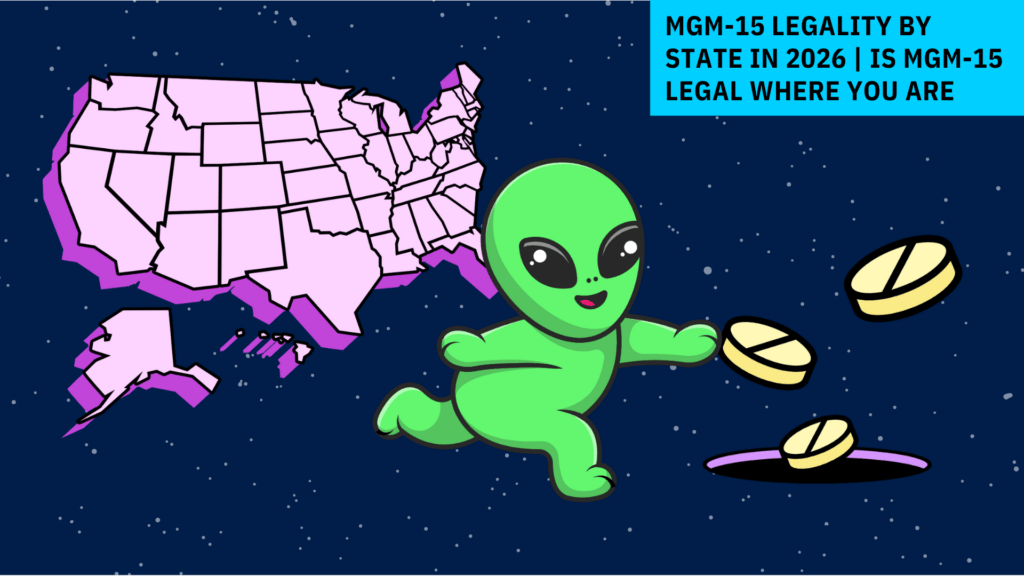
Yes, in 49 of 50 states. Amanita muscaria is not listed on any schedule of the federal Controlled Substances Act, and only Louisiana restricts it. Under Louisiana Act No. 159, in force since 2005, the mushroom is unlawful when intended for human consumption, though growing it as an ornamental remains permitted.
That is the whole legal picture at state level. The complication is not the law, it is the FDA, and that is covered below.
Why it is not federally controlled
Amanita muscaria does not contain psilocybin. This is the point that most confusion in this category traces back to. Psilocybin is a Schedule I controlled substance and the mushrooms that contain it are controlled accordingly. Amanita muscaria contains muscimol and ibotenic acid, which are entirely different compounds, and neither appears on the federal schedules.
So a product made from Amanita muscaria is not a “magic mushroom” product in the legal sense, whatever the marketing on the pack suggests. The two categories are regulated separately because they are chemically unrelated.
Is muscimol legal?
Muscimol is the primary psychoactive compound in Amanita muscaria and it is not scheduled federally. Isolated muscimol is treated the same way as the mushroom itself under the Controlled Substances Act, which is to say it is not addressed by it.
That is a narrow statement and worth reading precisely. Not being scheduled means it is not a controlled substance. It does not mean it is approved for sale in food, and it does not mean a state cannot regulate it. Those are different regimes.
The FDA position, stated accurately
In December 2024 the FDA issued an industry letter concluding that Amanita muscaria and its constituents, including muscimol and ibotenic acid, are not Generally Recognized as Safe for use in food, and that their use in food renders the product adulterated under the Federal Food, Drug, and Cosmetic Act.
That determination is frequently reported as a ban. It is not. It is a food-ingredient determination, and its practical effect is that edible products containing amanita are, in the FDA’s view, unlawfully adulterated food. The agency has enforcement discretion over how and whether it acts on that. As of September 2026 there has been no broad enforcement action against the retail category.
The honest reading is that these products occupy a grey zone: not controlled, not approved, and dependent on regulatory discretion. Anyone telling you the position is settled in either direction is overstating it.
State by state
| State | Position | Detail |
|---|---|---|
| Louisiana | Restricted | Act No. 159 (2005). Unlawful when intended for human consumption. Ornamental cultivation permitted. |
| All other 49 states | No specific restriction | No state statute specifically controlling Amanita muscaria or muscimol as of September 2026. |
Two named states come up often enough to answer directly. Texas has no statute controlling Amanita muscaria or muscimol, so it falls into the 49. Tennessee likewise has no specific restriction. In both cases the general food-safety framework applies, as it does everywhere, and that is where the FDA determination becomes relevant rather than the controlled substances code.
State law in adjacent categories moves quickly, so treat this as accurate to the review date on this page rather than as permanently settled.
What about amanita gummies and edibles specifically?
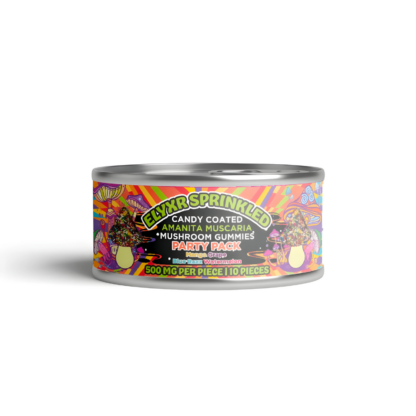
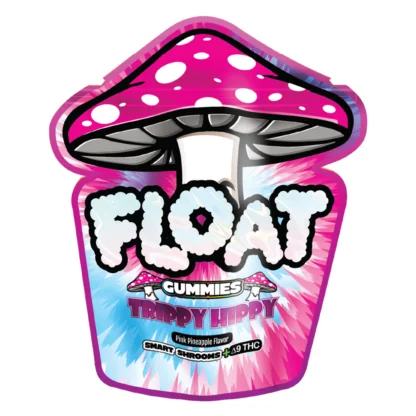
The legal analysis is the same, because it turns on the compound rather than the format. A gummy containing amanita extract is not a controlled substance in 49 states, and it is a product the FDA considers adulterated food.
What changes with edibles is the practical risk profile. Dosing in a gummy depends entirely on manufacturing consistency, and this is a category with no mandatory testing standard. Ibotenic acid in particular is worth knowing about: it converts to muscimol through decarboxylation during proper processing, and incomplete conversion leaves more of a compound with a materially different profile. Whether that conversion happened properly is not something you can tell from a package.
Is fly agaric the same thing?
Yes. Fly agaric is the common name for Amanita muscaria, the red mushroom with white spots. Fly amanita is another name for the same species. All of these are legally identical, and none of them are psilocybin mushrooms.
Frequently asked questions
Is Amanita muscaria a controlled substance?
No. It is not on any federal schedule. Only Louisiana restricts it at state level.
Can I buy amanita products online?
There is no federal prohibition on doing so in 49 states. The FDA considers amanita edibles adulterated food, which is a separate matter from legality of possession.
Is amanita the same as psilocybin mushrooms?
No. Amanita contains muscimol and ibotenic acid. Psilocybin mushrooms contain psilocybin, which is Schedule I. They are chemically and legally distinct.
Did the FDA ban amanita muscaria?
No. In December 2024 the FDA determined it is not Generally Recognized as Safe for food use, which makes amanita-containing food adulterated in the agency’s view. That is a food-ingredient determination, not a ban or a scheduling action.
Is it legal to grow Amanita muscaria?
In 49 states there is no restriction. In Louisiana, ornamental cultivation is permitted but cultivation for human consumption is not.
Last reviewed September 2026. This page is general information, not legal advice. Laws in this area change, and state legislatures have moved quickly on adjacent categories. Verify current law in your jurisdiction before acting on anything here.