







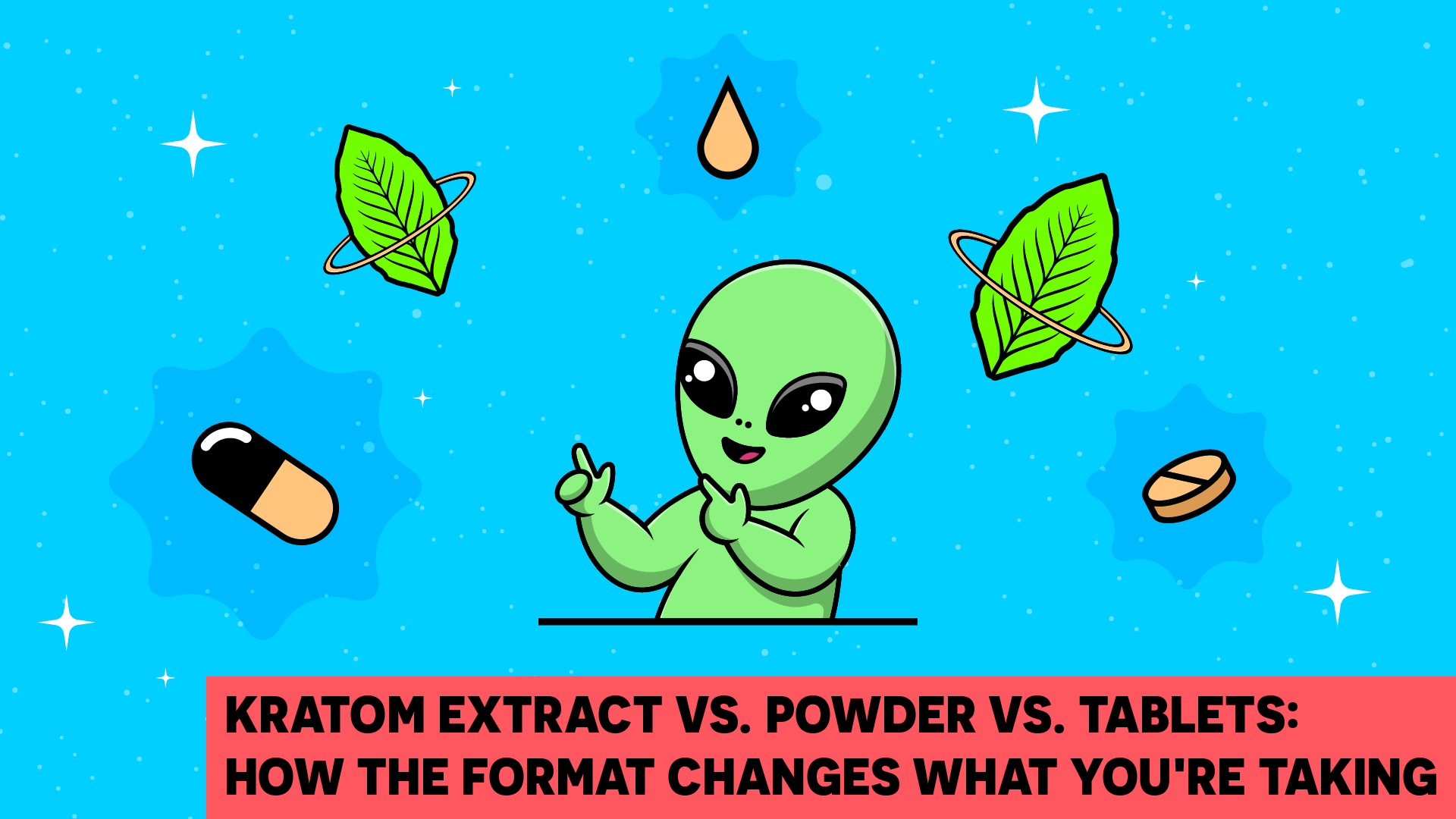
Kratom Extract vs. Powder vs. Tablets: How the Format Changes What You’re Taking
Walk into the kratom section of any smoke shop or scroll through an online store for five minutes and you will see the same three words over and over: powder, extract, and tablets. A lot of people assume these are just different packaging choices for the same product, the way a soda comes in a can or a bottle. That assumption causes more confusion than almost anything else in the kratom world, and it is usually the reason someone ends up saying a product “didn’t work” or “hit way harder than I expected.”
The format you choose changes the alkaloid concentration, how quickly you feel anything, how long it lasts, and even how your body builds a tolerance to it over time. None of that is a minor detail. If you have only ever tried one format, you have only experienced one version of what kratom can be.
What Kratom Powder Actually Is?
Powder is the baseline. It is made by drying kratom leaves and grinding them down into a fine texture, similar to how you would process any leafy botanical. Nothing is added and nothing is pulled out. You are getting the full, natural alkaloid profile the leaf came with, including mitragynine and the trace amounts of 7-hydroxymitragynine that occur naturally.
Because it is unconcentrated, powder tends to have a slower, more gradual onset. You are not hitting your system with a spike of isolated compounds. Most people describe the effects as building over twenty to thirty minutes and lasting a fair while once they arrive. This is the format most long-time kratom drinkers default to, whether they are brewing it as tea, mixing it into a drink, or using capsules filled with the same powder.
What Changes With Extract?
Extract is where things get more complicated, and where a lot of the confusion starts. Extract is made by pulling the active alkaloids out of the leaf material and concentrating them, usually through a water or ethanol-based process. What you are left with is a product where a small amount carries the alkaloid load of a much larger amount of raw leaf.
You will often see extracts labeled with a ratio, something like 10:1 or 15:1. That number tells you how much raw leaf it took to produce the finished extract, not exactly how strong the final product is. A 10:1 extract is not automatically ten times stronger than powder in a way you can do clean math on, because extraction efficiency varies by manufacturer and method. What you can count on is that extract is meaningfully more concentrated, the onset is usually faster, and the amount you need to feel anything is much smaller than what you would use with powder.
That concentration cuts both ways. Because it hits faster and harder, it is also easier to use more than you intended if you are going in with powder-sized habits. And because your body adapts to whatever alkaloid load you give it regularly, people who lean on concentrated extract day after day tend to notice their tolerance creeping up faster than someone sticking with powder.
Where Tablets Fit In?
Tablets are essentially extracted in a different delivery shape. Instead of a loose powder or liquid, the concentrated extract gets pressed into a pill form, which makes dosing far more consistent and the whole experience a lot less messy than trying to measure out tea or capsules precisely.
The tradeoff is that tablets carry the same concentration concerns as any other extract product. A single small tablet can represent several grams worth of raw leaf alkaloids. As a rough comparison that a lot of vendors cite, one typical serving of raw powder is in the same ballpark as five capsules or around eight tablets, depending on the specific product’s concentration. That ratio is not universal across every brand, but it gives you a sense of just how much more is packed into a tablet format.
Convenience is the real draw here. Tablets travel well, they don’t have a strong taste to mask, and the dosing is predictable from one tablet to the next in a way that scooping powder never quite is. For people who dislike the bitterness of kratom tea or find capsules inconvenient, tablets solve a real problem. They just solve it with a more concentrated product, which is worth knowing going in.
Onset, Duration, and Why They Differ
If you lined up powder, extract, and tablets and timed how each one felt, here is the general pattern people report. Powder tends to build slowly and last longer, since your body is processing the full range of compounds at once without an isolated spike. Extract and tablets tend to come on faster because the alkaloids are already concentrated and ready to absorb, but the window where you feel the strongest effects can be shorter, with a noticeable drop-off once it passes.
None of this is exact science you can set a timer to, because body chemistry, what you have eaten, and your own history with kratom all play a role. But the general shape holds across most user reports and vendor guidance: raw and natural formats are slower and steadier, concentrated formats are quicker and more intense while they last.
Tolerance Is the Part People Skip Past
This is the piece that gets left out of a lot of format comparisons, and it matters more than almost anything else here. Tolerance builds based on how much alkaloid load you are giving your body and how often. Concentrated formats deliver more alkaloid per use, which means regular use of extract or tablets tends to build tolerance noticeably faster than the same frequency of powder use.
This is not a reason to avoid extract or tablets. It is a reason to be intentional about which format you reach for and how often. Some people rotate formats specifically to avoid leaning too hard on one concentration level. Others stick with powder specifically because the slower build keeps their usage more predictable over time.
Picking a Format That Actually Fits You
There is no single “best” format here, just the one that matches what you are actually looking for. If you want something closer to the traditional, full-spectrum experience and you don’t mind the taste or the extra prep, powder is the most natural starting point. If convenience and consistent dosing matter more to you than taste or tradition, tablets solve that cleanly, as long as you respect that you are working with a more concentrated product. Extract sits in between, useful when you want something stronger than powder without the rigid dosing of a pressed tablet.
What matters most is reading the label. A reputable product will tell you whether you are holding powder, extract, or a pressed tablet, and a responsible vendor will show you lab testing so you know what alkaloid levels you are actually working with rather than guessing from a ratio on the package. Kratom is not a one-size product, and treating every format like it behaves the same way is exactly how people end up confused about their own experience with it.
A Quick Answer to the Common Questions
Is extract always stronger than powder?
Generally yes, because it concentrates the alkaloids that occur naturally in the leaf. But “how much stronger” depends on the specific extraction ratio and method, not a fixed multiplier.
Are tablets the same as extract?
Tablets are a delivery format for concentrated extract, pressed into a pill for consistency. The concentration concerns are the same as any extract product.
Does switching formats reset tolerance?
No single switch resets tolerance on its own, but many people find that stepping down to a less concentrated format for a while helps bring their usage back to a more moderate baseline.
Why do two products with the same ratio feel different?
Extraction methods and leaf quality vary between manufacturers, which is why the ratio on a label is a rough guide, not a guarantee of identical strength across brands.