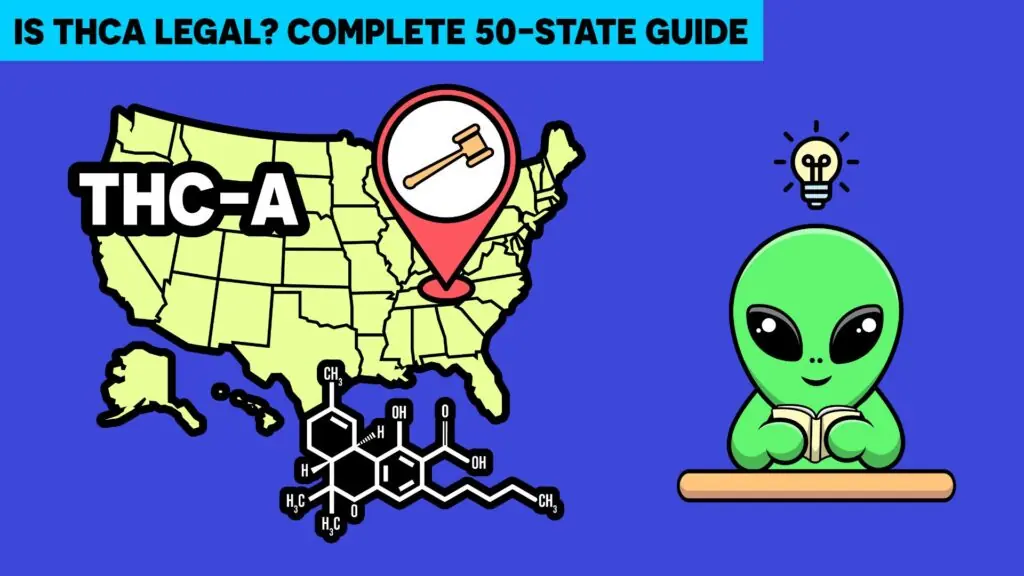



Is Delta 9 Legal? Full 50-State Guide
Delta 9 THC is one of the most confusing cannabis terms online.
Some brands say Delta 9 is federally legal. Some states sell Delta 9 gummies online. Some dispensaries sell Delta 9 flowers, vapes, drinks, and edibles. At the same time, marijuana is still illegal in many states.
So what is going on?
The answer depends on one key detail:
Where did the Delta 9 come from?
Delta 9 THC can be hemp-derived or marijuana-derived. The molecule is the same, but the legal treatment can be very different.
As of May 2026, hemp-derived Delta 9 products may be legal in many states if they meet federal and state hemp rules. Marijuana-derived Delta 9 is legal only in states with medical or adult-use cannabis programs. Federal hemp rules are also scheduled to change in November 2026, which could reshape the entire hemp-derived THC market. The 2018 Farm Bill created the hemp loophole by defining legal hemp mainly through Delta-9 THC concentration, while a 2025 federal law is scheduled to close much of that loophole through a total THC standard and a very low milligram cap effective November 12, 2026.
This guide explains the difference, what competitors often miss, and how Delta 9 legality currently looks across all 50 states.
What is Delta 9 THC?
Delta 9 THC, short for Delta-9-tetrahydrocannabinol, is the main intoxicating cannabinoid in cannabis.
It is the compound most responsible for the classic cannabis “high.” It can affect mood, perception, appetite, coordination, reaction time, and short-term memory.
Delta 9 can appear in many product types:
- Gummies.
- Drinks.
- Vapes.
- Flower.
- Pre-rolls.
- Tinctures.
- Capsules.
- Chocolates.
- Dispensary edibles.
The product format matters, but the source matters more legally.
A Delta 9 gummy made from hemp may be treated differently from a Delta 9 gummy made from marijuana, even if the final active compound is chemically the same.
That is the part many consumers find confusing.
Hemp-Derived Delta 9 vs Marijuana-Derived Delta 9
Hemp and marijuana are both cannabis.
The legal difference comes from THC concentration. Under the 2018 Farm Bill, hemp was federally defined as cannabis with no more than 0.3% Delta 9 THC by dry weight. That definition allowed hemp-derived cannabinoids to enter the market, including Delta 9 products that stay within the dry-weight limit.
Marijuana-derived Delta 9 comes from cannabis that exceeds the hemp threshold. It remains federally controlled, although many states allow it for medical or adult use.
In plain language:
Hemp-derived Delta 9 may be sold outside dispensaries in some states if it meets hemp rules.
Marijuana-derived Delta 9 is usually sold through licensed cannabis dispensaries in medical or adult-use states.
The molecule may be the same, but the legal pathway is different.
Is Delta 9 Federally Legal?
The answer is split.
Hemp-derived Delta 9 has been federally legal under the 2018 Farm Bill if the product meets the hemp definition and stays within the 0.3% Delta 9 THC dry-weight limit. This created a pathway for products like hemp Delta 9 gummies and drinks.
Marijuana-derived Delta 9 remains federally illegal unless it falls within a federally approved program or product category. State legalization does not fully remove federal risk.
The more important update is coming soon.
Federal law passed in 2025 is scheduled to close much of the intoxicating hemp loophole on November 12, 2026. The new framework moves toward a total THC standard and limits finished consumer products to a very low amount of total THC per container, which would affect most current hemp-derived THC gummies, beverages, and similar products.
So, as of May 2026, many hemp-derived Delta 9 products still exist. But the federal market may look very different by late 2026.
What Does “0.3% Delta 9 THC by Dry Weight” Mean?
This is the rule that created the hemp-derived Delta 9 market.
The 0.3% limit is based on product weight, not serving strength. That means a heavier edible can contain several milligrams of Delta 9 and still remain under the 0.3% dry-weight threshold.
For example, a large gummy may legally contain more Delta 9 than a tiny mint because the calculation depends on total product weight.
This is why hemp-derived Delta 9 gummies became popular. Brands could create adult-use intoxicating products while staying under the dry-weight threshold.
But states have reacted differently.
Some states accepted the federal approach. Others added serving limits, total THC rules, age restrictions, licensing rules, or outright bans on intoxicating hemp products.
Why “Total THC” Matters
Total THC counts more than just Delta 9 THC.
It usually includes Delta 9 plus the THC that could be created from THCA and sometimes other related compounds, depending on the state rule. This matters because many hemp products rely on narrow definitions that look only at Delta 9 before heating or conversion.
The new federal hemp restrictions scheduled for November 2026 are expected to make total THC much more important. The law is designed to close the loophole that allowed intoxicating hemp products to be sold outside marijuana regulations.
For consumers, the takeaway is simple:
A product that is legal under today’s Delta 9 dry-weight rule may not remain legal under future total THC rules.
Is Delta 9 Legal in All 50 States?
No.
Delta 9 is not legal in the same way across all 50 states.
Hemp-derived Delta 9 may be allowed, restricted, or banned depending on the state. Marijuana-derived Delta 9 may be legal for adult use, legal for medical patients only, limited to low-THC programs, or fully illegal.
Cannabis law across the U.S. remains a patchwork. A 2026 legal overview reported that 40 states, D.C., and several territories allow medical marijuana, while 24 states plus several territories allow recreational use.
That is why a 50-state view is essential.
Delta 9 Legality by State
Important note
This table is a high-level consumer guide as of May 2026. It is not legal advice.
The “hemp-derived Delta 9” column refers to products marketed under hemp laws, usually gummies, drinks, tinctures, or edibles. The “marijuana-derived Delta 9” column refers to state-regulated cannabis products sold through medical or adult-use cannabis systems.
State laws change quickly. Always check current local rules before buying, selling, shipping, or traveling with Delta 9.
| State | Hemp-Derived Delta 9 | Marijuana-Derived Delta 9 | Practical Status |
|---|---|---|---|
| Alabama | Restricted, check product rules | Medical program rolling out | Hemp products may be available, medical access still developing |
| Alaska | Restricted or regulated | Adult-use legal | Dispensary Delta 9 legal for adults |
| Arizona | Restricted or regulated | Adult-use legal | Adult-use dispensary access |
| Arkansas | High risk or restricted | Medical legal | Hemp-derived psychoactive products face enforcement risk |
| California | Restricted outside cannabis system | Adult-use legal | Dispensary Delta 9 legal, hemp intoxicants restricted |
| Colorado | Regulated | Adult-use legal | Adult-use dispensary access |
| Connecticut | Regulated low-dose hemp | Adult-use legal | Delta 9 legal with rules |
| Delaware | Restricted or developing | Adult-use legal, retail developing | Check current sales rules |
| Florida | Hemp allowed with restrictions | Medical legal | No adult-use marijuana after 2024 amendment failed |
| Georgia | Restricted hemp market | Low-THC medical oil only | Hemp Delta 9 may be available, marijuana access very limited |
| Hawaii | Restricted hemp market | Medical legal | Check local hemp rules |
| Idaho | High risk or prohibited | Illegal | Avoid Delta 9 products |
| Illinois | Regulated | Adult-use legal | Adult-use dispensary access |
| Indiana | Hemp market with uncertainty | Illegal | Hemp-derived only if compliant |
| Iowa | Very restricted hemp THC limits | Medical cannabidiol program | Strict limits |
| Kansas | High risk or prohibited | Illegal except limited CBD | Avoid intoxicating Delta 9 |
| Kentucky | Regulated hemp market | Medical legal | Check product and program rules |
| Louisiana | Strict hemp limits | Medical legal | Legal with tight serving and retail limits |
| Maine | Regulated | Adult-use legal | Adult-use dispensary access |
| Maryland | Strict hemp limits | Adult-use legal | Higher-THC products generally move into cannabis system |
| Massachusetts | Restricted outside cannabis system | Adult-use legal | Dispensary Delta 9 legal |
| Michigan | Regulated | Adult-use legal | Adult-use dispensary access |
| Minnesota | Regulated low-dose hemp | Adult-use legal | Strong low-dose hemp Delta 9 market |
| Mississippi | Restricted hemp market | Medical legal | Check current product rules |
| Missouri | Changing, dispensary shift pending | Adult-use legal | Intoxicating hemp products moving toward dispensary control in late 2026 |
| Montana | Regulated | Adult-use legal | Adult-use dispensary access |
| Nebraska | High risk or restricted | Medical program developing | Avoid assuming broad legality |
| Nevada | Restricted outside cannabis system | Adult-use legal | Dispensary Delta 9 legal |
| New Hampshire | Restricted hemp market | Medical legal | No adult-use sales |
| New Jersey | Regulated | Adult-use legal | Adult-use dispensary access |
| New Mexico | Regulated | Adult-use legal | Adult-use dispensary access |
| New York | Regulated hemp and cannabis | Adult-use legal | Legal with state rules |
| North Carolina | Hemp market with uncertainty | No statewide adult-use or medical program | Hemp-derived only if compliant |
| North Dakota | Restricted hemp market | Medical legal | Check local rules |
| Ohio | Changing and regulated | Adult-use legal | Adult-use market active, hemp rules evolving |
| Oklahoma | Hemp market with rules | Medical legal | No adult-use marijuana |
| Oregon | Restricted outside cannabis system | Adult-use legal | Dispensary Delta 9 legal |
| Pennsylvania | Hemp market with uncertainty | Medical legal | Adult-use bill has advanced but not final |
| Rhode Island | Restricted hemp market | Adult-use legal | Dispensary Delta 9 legal |
| South Carolina | Restricted hemp market | Illegal except limited CBD | High caution |
| South Dakota | Restricted hemp market | Medical legal | No adult-use marijuana |
| Tennessee | Regulated hemp market | Marijuana illegal | Hemp-derived Delta 9 legal with strict rules |
| Texas | Legally active and restricted | Low-THC medical only | Hemp Delta 9 rules changing and disputed |
| Utah | Restricted hemp market | Medical legal | High caution |
| Vermont | Regulated | Adult-use legal | Adult-use dispensary access |
| Virginia | Hemp restricted | Adult possession legal, retail limited | Medical retail, adult-use sales limited until rollout |
| Washington | Restricted outside cannabis system | Adult-use legal | Dispensary Delta 9 legal |
| West Virginia | Restricted hemp market | Medical legal | Check product rules |
| Wisconsin | Hemp loophole gray area | Marijuana illegal | Hemp-derived Delta 9 may exist, state risk remains |
| Wyoming | High risk or prohibited | Illegal | Avoid intoxicating Delta 9 |
| Washington, D.C. | Gray market hemp and cannabis | Adult possession legal | Sales remain legally complex |
States Where Marijuana-Derived Delta 9 Is Adult-Use Legal
Adult-use cannabis laws allow adults 21 and older to possess and purchase marijuana-derived Delta 9 through regulated systems, although details vary by state.
The adult-use category generally includes states such as Alaska, Arizona, California, Colorado, Connecticut, Illinois, Maine, Maryland, Massachusetts, Michigan, Minnesota, Missouri, Montana, Nevada, New Jersey, New Mexico, New York, Ohio, Oregon, Rhode Island, Vermont, Virginia, and Washington, plus Washington, D.C. Virginia is a special case because possession is legal, but licensed adult-use retail sales have been delayed and are expected later. Virginia legalized possession in 2021, but retail sales remain limited to medical patients as of 2026, with adult-use sales anticipated in 2027.
If your customer is in an adult-use state, marijuana-derived Delta 9 is usually purchased through licensed dispensaries, not ordinary online hemp shops.
States Where Delta 9 Is Medical-Only
Some states allow marijuana-derived Delta 9 only for registered medical patients.
This category includes states such as Alabama, Arkansas, Florida, Hawaii, Kentucky, Louisiana, Mississippi, New Hampshire, North Dakota, Oklahoma, Pennsylvania, South Dakota, Utah, and West Virginia. Some states have broader medical programs, while others are more limited.
Alabama is a good example of a state where medical cannabis is legal but still rolling out. AP reported that Alabama’s medical cannabis commission approved dispensary licenses, with products expected for patients in spring 2026 after years of delay.
Florida is another example. Medical marijuana is legal, but adult-use legalization failed in 2024 because the amendment received majority support but did not meet Florida’s 60% threshold.
Medical-only does not mean anyone can buy Delta 9. It usually means patients need a qualifying condition, registration, and access through licensed dispensaries.
States With Low-THC or Limited Programs
Some states do not have full medical cannabis programs but allow low-THC oil, CBD-focused products, or limited medical access.
Georgia and Texas are common examples. Georgia allows low-THC oil for qualifying patients, but not broad marijuana-derived edibles. Texas has a Compassionate Use Program with limited THC access and ongoing hemp disputes.
Texas is especially active. The state vetoed a 2025 bill that would have banned many THC hemp products, and later rulemaking and litigation have continued around smokable hemp and total THC testing.
Limited programs can be confusing because they may permit certain low-THC products while still banning recreational marijuana-derived Delta 9.
States Where Delta 9 Is Highest Risk
Some states remain especially risky for intoxicating Delta 9 products.
Idaho, Kansas, Nebraska, South Carolina, Wisconsin, and Wyoming have some of the most restrictive cannabis environments, although local hemp loopholes or limited programs may exist in certain places.
Idaho remains one of the strictest states, although a medical cannabis initiative has been active for the 2026 ballot.
Arkansas is also important because its ban on psychoactive hemp-derived cannabinoids became enforceable again after a 2025 appeals ruling.
In high-risk states, do not assume a Delta 9 product is legal simply because it can be ordered online.
Can You Buy Delta 9 Online?
Sometimes.
Hemp-derived Delta 9 products have been sold online in many states under the 2018 Farm Bill framework. But online availability does not automatically mean the product is legal in your state.
A responsible online brand should block restricted states, provide third-party lab reports, show Delta 9 content clearly, and verify age.
Before buying Delta 9 online, check:
- Your state law.
- The product’s Delta 9 THC percentage.
- The total THC level.
- The serving size.
- The COA, also called Certificate of Analysis.
- Age restrictions.
- Shipping restrictions.
- Whether the product is hemp-derived or marijuana-derived.
If a brand says it ships “legal Delta 9” to every state without restrictions, be careful.
That is usually too broad.
How to Read a Delta 9 Lab Report
A lab report is essential for hemp-derived Delta 9 products.
The COA should show cannabinoid potency and safety testing. It should also match the product batch.
Look for:
- Delta 9 THC amount.
- Total THC.
- CBD and other cannabinoids.
- Batch number.
- Testing date.
- Lab name.
- Pesticide testing.
- Heavy metal testing.
- Residual solvent testing.
- Microbial testing.
For legality, Delta 9 and total THC matter. For safety, contaminant testing matters just as much.
If a product has no COA, do not treat it as trustworthy.
Can You Travel With Delta 9?
Be careful.
Traveling with marijuana-derived Delta 9 across state lines is federally risky, even between two legal states.
Traveling with hemp-derived Delta 9 is also complicated because states have different hemp rules. A product that is legal in your home state may be restricted in your destination state.
Air travel adds another layer because airports and TSA operate under federal authority. TSA’s main focus is security, not cannabis enforcement, but if officers find a product that appears illegal, they may refer it to law enforcement.
The safest travel advice is simple:
Do not travel with Delta 9 unless you have confirmed the law at your departure point, destination, layover location, and mode of transportation.
Is Delta 9 Safe?
Delta 9 is intoxicating. It should be treated seriously.
Common effects may include euphoria, relaxation, altered perception, dry mouth, red eyes, increased appetite, slower reaction time, anxiety, paranoia, dizziness, and sleepiness.
Edibles and drinks can be especially tricky because they take longer to kick in. A person may take more too soon and then feel overwhelmed later.
Basic safety guidance:
- Start with a low dose.
- Wait before taking more.
- Do not mix with alcohol.
- Do not drive.
- Keep away from children and pets.
- Buy only tested products.
- Avoid products with unclear labels.
A legal product can still be too strong for a beginner.
What Will Change in November 2026?
This is the biggest update many competitor blogs miss.
The federal hemp loophole is scheduled to close on November 12, 2026. The new law shifts toward a total THC standard and a 0.4 mg total THC per container limit for finished consumer hemp products. That would likely remove most intoxicating hemp-derived Delta 9 gummies, beverages, and edibles from the current legal market unless Congress or regulators change course before implementation.
This does not automatically change state-licensed marijuana programs.
It mainly affects hemp-derived intoxicating products that have been sold outside dispensaries.
For brands, this is huge. For consumers, it means products that are available in early 2026 may not be available in the same way by late 2026.
Frequently Asked Questions
Q. Is Delta 9 legal federally?
Hemp-derived Delta 9 may be federally legal under the current hemp framework if it meets the 0.3% Delta 9 THC dry-weight limit. Marijuana-derived Delta 9 remains federally controlled. Federal hemp rules are scheduled to tighten in November 2026.
Q. Is hemp-derived Delta 9 the same as marijuana-derived Delta 9?
Chemically, Delta 9 THC is the same compound. Legally, it is treated differently depending on whether it comes from hemp or marijuana.
Q. Is Delta 9 legal in all 50 states?
No. Hemp-derived Delta 9 is restricted or prohibited in some states, and marijuana-derived Delta 9 is legal only in states with medical or adult-use cannabis programs.
Q. Can I buy Delta 9 gummies online?
You may be able to buy hemp-derived Delta 9 gummies online in some states. But online availability does not guarantee legality. Always check your state law and the product COA.
Q. What states allow recreational Delta 9?
Adult-use marijuana-derived Delta 9 is legal in many states, including California, Colorado, Illinois, Michigan, New York, New Jersey, Oregon, Washington, and others. A 2026 overview reported 24 states plus several territories allow recreational cannabis.
Q. What is the legal Delta 9 limit for hemp?
Under the 2018 Farm Bill framework, hemp must contain no more than 0.3% Delta 9 THC by dry weight. That framework is scheduled to change with stricter federal rules in November 2026.
Q. Can I fly with Delta 9?
It is risky. Marijuana-derived Delta 9 remains federally controlled, and hemp-derived Delta 9 rules vary by state. Do not fly with Delta 9 unless you have verified the law carefully.
Q. Will hemp-derived Delta 9 be banned in 2026?
Most current intoxicating hemp-derived Delta 9 products may be affected by the new federal total THC and milligram cap rules scheduled for November 12, 2026.
Final Thoughts
So, is Delta 9 legal?
The answer depends on the source, the product, the state, and the date.
Hemp-derived Delta 9 has been widely sold under the 2018 Farm Bill if it stays under the 0.3% Delta 9 THC dry-weight threshold. Marijuana-derived Delta 9 is legal only in state-regulated medical or adult-use cannabis programs.
But the rules are changing.
By November 2026, new federal hemp restrictions could dramatically reduce the availability of intoxicating hemp-derived Delta 9 products. That means consumers and brands should not rely on old legal guides.
The simplest takeaway is this:
Delta 9 may be legal in some forms and some states, but it is not legal the same way everywhere. Always check the source, COA, state law, and upcoming federal changes before buying.