


What’s the Difference Between THCO and THCA?
If you’ve been browsing the shelves of your local hemp shop or scrolling through online stores lately, you’ve probably noticed the alphabet soup of cannabinoids getting more complicated. Gone are the days when you only had to worry about CBD and THC. Now, we have Delta-8, Delta-10, HHC, and two big contenders that often get confused: THCO and THCA.
It’s easy to feel a little lost. Are they the same thing with different spellings? Is one stronger than the other? And most importantly, which one is right for you? If you’re scratching your head trying to decode these labels, you aren’t alone. We’re here to break down the differences between THCO and THCA in simple way so you can shop with confidence.
What Are THCO and THCA?
Before we pit them against each other, let’s define what we’re actually talking about. While they sound similar, these two compounds are chemically very different, and they offer wildly different experiences.
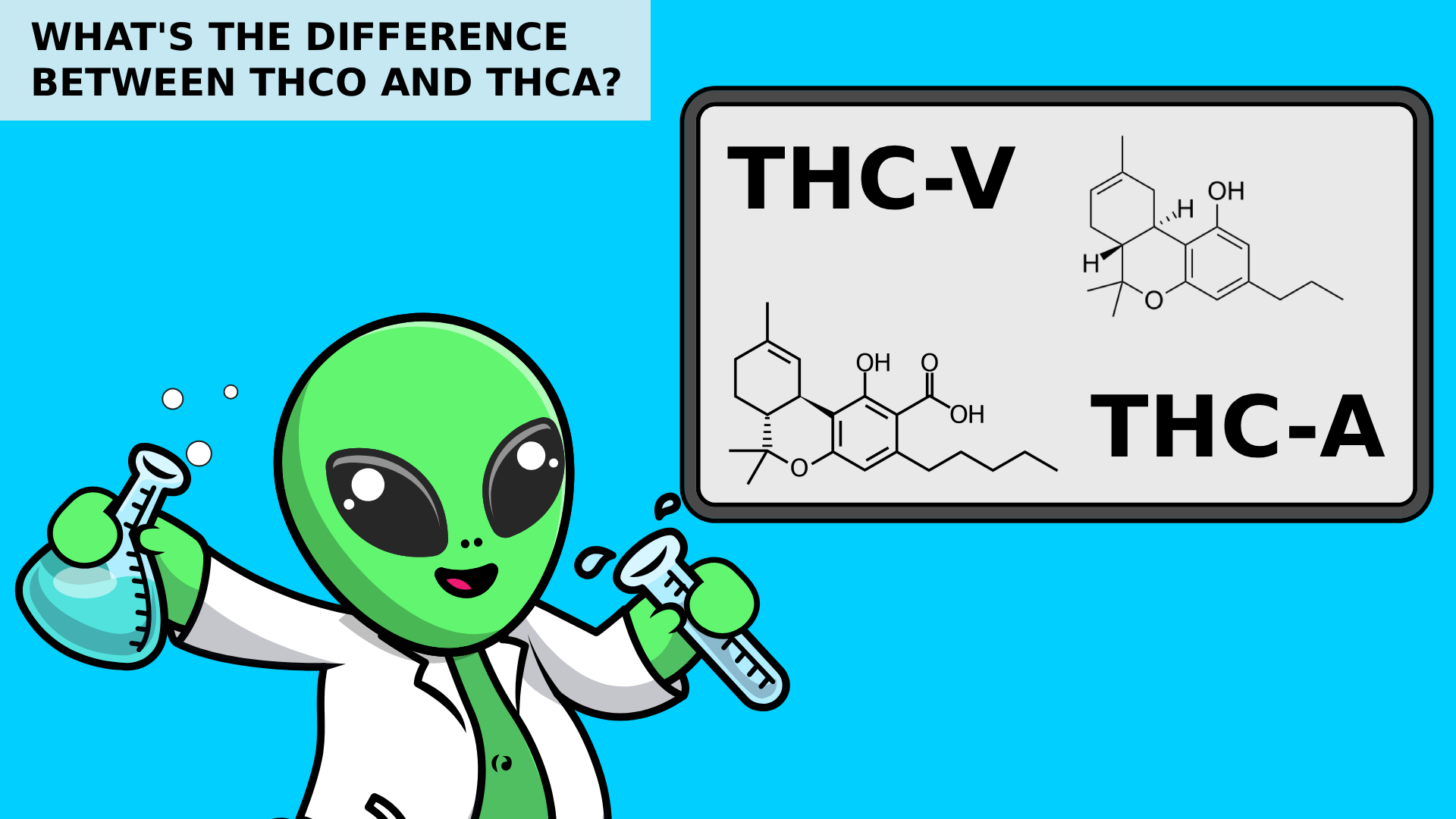
THCA (Tetrahydrocannabinolic Acid) is the “raw” form of THC. It is found naturally in the living cannabis plant. If you were to walk through a hemp field and pluck a fresh flower, it would be rich in THCA, not the psychoactive THC you might expect. It’s completely natural and non-intoxicating in its raw state.
THCO (THC-O Acetate), on the other hand, is a bit more scientific. It doesn’t exist naturally in the plant in significant amounts. Instead, it’s a semi-synthetic cannabinoid created in a lab. Chemists start with a base cannabinoid (usually Delta-8 THC derived from hemp) and add an acetic anhydride. This chemical process changes the structure of the molecule, making it incredibly potent.
Think of THCA as a raw ingredient straight from the garden, while THCO is like a high-tech, engineered version designed for maximum impact.
What are the Differences & How Do They Feel?
This is the big question everyone asks: “What will happen if I take it?” The effects of THCA and THCO are night and day.
The THCA Experience
As we mentioned, THCA on its own is non-psychoactive. If you eat raw THCA flower or take a raw tincture, you won’t get high. However, THCA has a secret trick. When you apply heat to it by smoking, vaping, or cooking, it goes through a process called decarboxylation. This heat knocks off a molecule and transforms THCA into standard Delta-9 THC.
So, if you buy “premium THCA hemp flower” and smoke it, the experience is almost identical to smoking traditional cannabis. You get that classic, immediate euphoria and relaxation.
The THCO Experience
THCO is often called the “psychedelic cannabinoid” of the hemp world. Why? because it is reported to be roughly three times stronger than standard Delta-9 THC.
Unlike THCA, THCO is a “prodrug.” This means it is inactive until your body metabolizes it. When you take a puff of a THCO vape or eat a gummy, nothing happens immediately. It can take 20 to 30 minutes (or longer) for your liver to process it. But once it kicks in, the effects are described as heavy, bordering on hallucinogenic for some users, and very introspective.
In summary:
- THCA: Classic, familiar effects (once heated). Immediate onset when smoked.
- THCO: Extremely potent, delayed onset. Often described as a heavier, more spiritual or psychedelic high.
Are THCO & THCA Legal?
Navigating the legality of cannabinoids in the US is tricky, but here is the general lay of the land as of now.
Both THCA and THCO currently exist in a legal gray area thanks to the 2018 Farm Bill. This federal law legalized hemp and all its derivatives, provided they contain less than 0.3% Delta-9 THC by dry weight.
- THCA Legality: Because THCA is technically not Delta-9 THC, it is federally legal as long as the Delta-9 content in the raw product is under the 0.3% limit. However, some states are moving to close this “loophole” by testing for “Total THC” (combining THCA and Delta-9), which would make most THCA flower illegal.
- THCO Legality: THCO is also derived from federally legal hemp. However, because it is synthetic, its legal footing is a bit shakier. In early 2023, the DEA stated in a letter that they consider THCO to be a controlled substance because it does not occur naturally in the plant. Despite this, it is still widely sold, but enforcement varies heavily by state.
Warning: State laws change fast. Always check your specific state regulations before buying either product, as some states have explicitly banned all “alterable” or synthetic cannabinoids.
Benefits vs. Risks
Why would you choose one over the other? It depends entirely on what you are looking for.
Potential Benefits:
- THCA: Great for purists who want a natural, plant-based experience. If you consume it raw, it may offer anti-inflammatory and neuroprotective benefits without the high. If smoked, it provides legal access to a classic cannabis experience.
- THCO: Ideal for users with a very high tolerance who don’t feel much from standard products. It’s also favored by those looking for deep introspection or a heavy “body high” for sleep and relaxation.
Potential Risks:
- THCA: The main risk is legal confusion. Because THCA flower looks and smells exactly like illegal marijuana, it can lead to misunderstandings with law enforcement.
- THCO: The potency is the main risk here. It is very easy to take too much, which can lead to anxiety, paranoia, or an overwhelming experience that lasts for hours. Additionally, there are concerns about the safety of vaping acetates (the chemical group THCO belongs to) at high temperatures.
Safety First: Buying Smart
We can’t stress this enough: quality matters. Because the FDA doesn’t regulate these products, the market is a mix of high-quality brands and sketchy operators.
When buying THCO, purity is critical. You want to make sure all the chemicals used in the manufacturing process have been fully removed. If they haven’t, you could be inhaling harmful byproducts.
When buying THCA, you want to ensure it’s actually hemp and not “hot” marijuana that could get you in legal trouble.
The Golden Rule: Never buy a product without a Certificate of Analysis (COA). This is a lab report from a third-party testing facility. It proves that the product is clean, free of pesticides and heavy metals, and contains exactly the potency claimed on the label. If a brand can’t show you a COA, run the other way.
Consumer Tips: Which Should You Choose?
Still on the fence? Here is a quick cheat sheet to help you decide.
Choose THCA if:
- You want a natural, plant-derived product.
- You enjoy the ritual of smoking or vaping flower.
- You are looking for a familiar, classic cannabis “high” (when heated).
- You want immediate effects.
Choose THCO if:
- You have a very high tolerance and regular THC doesn’t do much for you.
- You prefer edibles or vapes over flower.
- You are looking for a deeper, more intense, or “spiritual” experience.
- You don’t mind waiting 30+ minutes for the effects to kick in.
Frequently Asked Questions
Q. Is THCO stronger than THCA?
Yes, significantly. When THCA is heated and becomes Delta-9 THC, it provides a standard level of potency. THCO is reported to be roughly three times more potent than Delta-9 THC. It is not recommended for beginners.
Q. Are THCO and THCA legal?
Federally, they are often sold under the protection of the 2018 Farm Bill. However, the DEA has flagged THCO as a controlled substance due to its synthetic nature, and many states have specific bans on both. Always check your local laws.
Q. Can I fail a drug test from THCO or THCA?
Yes. Both cannabinoids will result in a positive drug test. Drug screenings look for THC metabolites, which your body produces after processing both THCO and THCA.
Q. Is THCO safe to vape?
There is ongoing debate about this. Because THCO is an acetate, there are concerns that vaping it at high temperatures could release ketene gas, a harmful compound. Many users prefer to consume THCO as edibles (gummies or tinctures) to avoid this potential lung risk.
Q. Does THCA get you high if you eat it raw?
No. In its raw form, THCA is non-intoxicating. You must apply heat (decarboxylation) to convert it to psychoactive THC.