



What is the Difference Between Live Resin vs. Distillate?
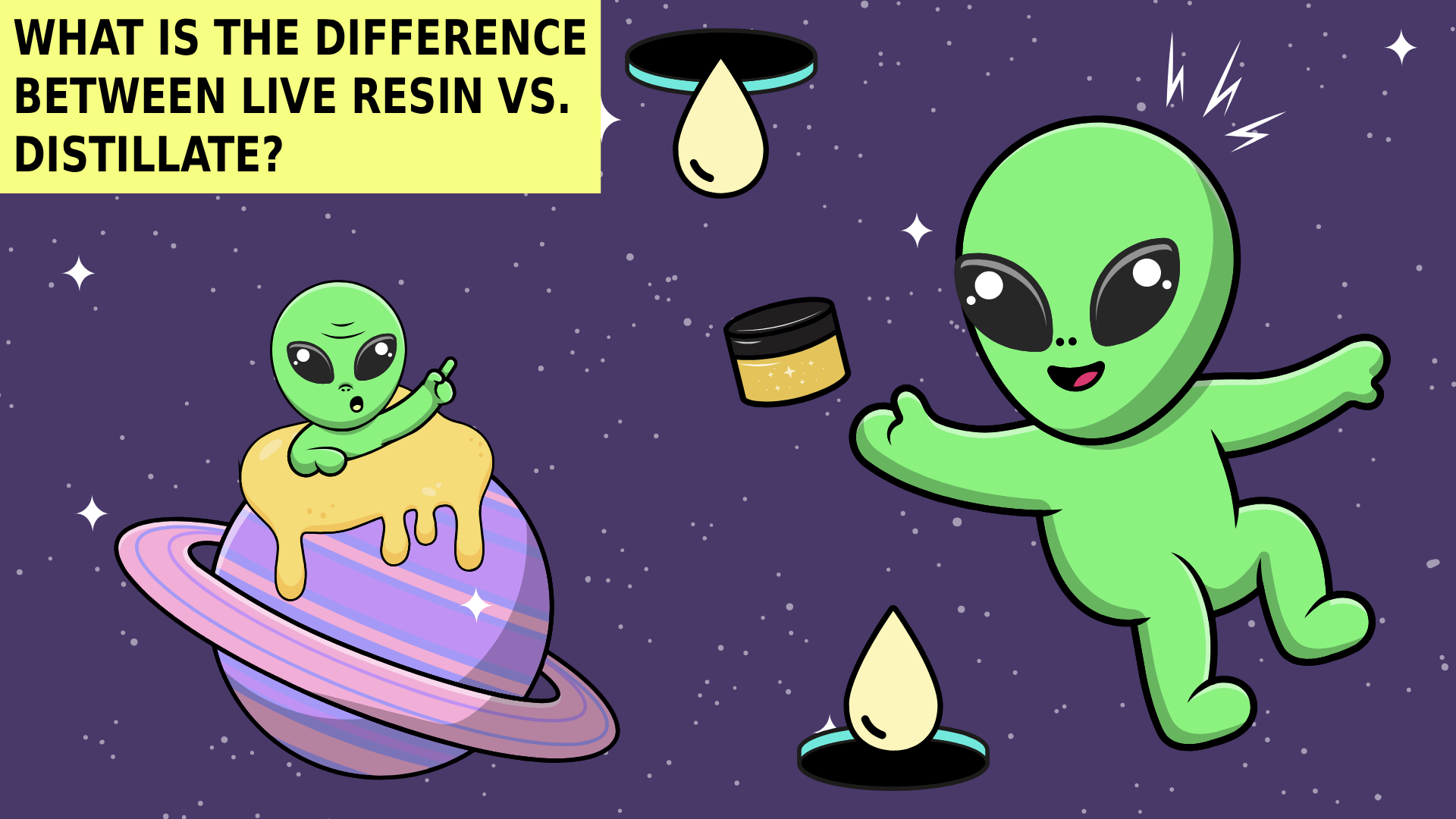
Wondering how to choose an ideal cannabis product for yourself? Well, to get a genuine product with reliable results, you must ensure you select the ideal flavor, aroma, and, most importantly, types of extract. Live resin and Distillate are two intriguing products you will come across while exploring cannabis products. While both provide a similar kind of effect, users are known to prefer the other based on factors such as their flavor, aroma, and potency.
If you do not know much about live resin and distillate cannabis extracts, read on till the end. This blog will discuss the differences between the two in detail.
Basics on Understanding Cannabis Extracts
The Cannabis extract, primarily known as concentrates, is a product that is obtained by segregating the active compounds from the raw plant material. The entire focus of this extraction method is to obtain a more refined product that has a high concentration of the active compounds. This also minimizes the concentration of impurities like chlorophyll and plant waxes.
Different types of concentrates are obtained due to the different extraction techniques. Among these techniques, some focus on preserving the plant’s natural chemical composition and aroma. On the other hand, the other techniques mostly focus on potency and purity. Live resin is known for its rich character, and distillate, on the other hand, is known for its high purity and refined content.
Understanding the formulation and the techniques of isolating the valuable cannibal compounds, such as cannabinoids-THC and CBD, and also terpenes, is essential to preserve their natural properties.
Various techniques are used to achieve this separation. Each technique has a different result based on the process:
- Solvent-based extraction: To extract the concentrates from the plant matter, this technique uses compounds like butane, propane, or ethanol to dissolve and obtain them. After the compounds are separated, we are left with a total oil or concentrated oil, and the solvent is removed carefully.
- Solventless Extraction: Involves the extraction of resin glands to obtain the cannabinoids and terpenes, with the help of mechanical processes, heat, and pressure. This method is considered to be cleaner compared to the others, as it does not involve any chemicals to dissolve the plant materials.
- Distillation: This technique is used to obtain a more refined or pure product. This is done by heating the crude products and separating them on the basis of their boiling points. The resulting compound is known as the distillate.
What is Live Resin?
So, what is live resin? Among other cannabis concentrates, live resin is known for preserving its natural aroma, flavor, and chemical composition. Compared to the traditional methods that involve drying and curing, live resin is extracted by immediately freezing the freshly picked cannabis. This is also known as flash freezing. Due to this process of immediate freezing, the precious cannabinoids and terpenes are locked in, which would have degraded if the raw materials were dried and cured.
After flash freezing, chemical compounds such as butane and propane are used in measured amounts to extract the desired components. This helps to obtain a full-spectrum extract that consists of the raw terpene profile of the plant and the cannabinoids in a perfect balance. As this results in a richer terpene concentrate, live resin becomes stronger in aroma, flavor, and a complex chemical profile.
What is Distillate?
Next, let’s discuss what distillate is. Focused mainly on purity and potency, Distillate is a highly refined cannabis extract that preserves the plant’s flavor and aroma. The extraction of Distillate is done by a process known as short-path distillation. In this method, the crude cannabis oil is heated until it separates a specific compound from other compounds based on their respective boiling points.
Many impurities, such as chlorophyll, plant wax, and residuals, are removed with the help of this method. This leaves behind a nearly purified extract of cannabinoids. This can consist of up to 90% of THC or CBD. Due to its rigorous extraction procedures, it is usually odorless and tasteless, making it versatile.
Comparison Between Live Resin VS Distillate
Although both live resin and distillate are derived from the same plant, the process of extraction makes the outcome distinctly different. The overall product is dependent on various factors listed below:
| Factors | Live resin | Distillate |
| Source Material | It is made from freshly harvested and frozen cannabis. | It is made from cannabis that is dried and cured, which is further refined. |
| Process of Extraction | To preserve natural properties, it is extracted using solvents at low temperatures. | It uses a distillation process so that removal of residues and cannabinoids can be done simultaneously. |
| Composition | Consists of a full spectrum of cannabinoids, terpenes, and flavonoids. | Consists mainly of cannabinoids, that is, THC or CBD, and less of terpenes. |
| Aroma and Flavor | It has a strong and natural aroma and flavor due to the presence of terpenes. | The aroma is neutral and flavorless. |
| Potency | It has a medium to high potency and balanced profile. | It has a very high potency that can go up to 90% of cannabinoids. |
| Consistency | Live resin has a sticky and wax-like texture. | Distillate has a thick, clear, and amber oil consistency. |
| Uses | It is used for flavor-rich vaping or dabbing. | It is used in edibles, tinctures, and vapes with proper dosage. |
The Potency and Composition
Based on the composition, we can determine how a cannabis extract behaves, tastes, and interacts. Although both live resin and distillate contain cannabinoids, their chemical properties cause them to differ.
Live Resin: It consists of a broad range of naturally occurring compounds derived from cannabis plants. These include major components like THC and CBD, as well as minor components such as CBG or CBC.
Due to this well-balanced mixture of components that are naturally occurring in a balanced way, it contributes to an effect known as the entourage effect. This has a potency of almost 65% to 85% of cannabinoids, which is also dependent on the strain and extraction techniques used.
Distillate: It is extracted with a high concentration of cannabinoids through a method of purification and distillation. In the process, any kind of compounds that are not required are discarded, resulting in a product that has a concentration of THC and CBD greater than 95%. However, due to a low terpene concentration, it lacks complex flavor and aroma.
Overall, Live resin is considered closer to the natural form than distillate, which is used in controlled formulation and dosage.
Flavour VS Aroma VS Experience
The sensory factors between live resin and distillate are the most noticeable features. This distinction is caused by the presence or absence of terpenes or the concentrations in which terpenes are present. Terpene gives them their aroma and flavor based on the strain.
Live Resin: Live resin is prominently known for its rich and natural aroma, which is closest to the plant profile. When cannabis is freshly harvested to make live resin, the process of freezing these freshly harvested plants causes them to retain their high concentrations of terpenes, resulting in a strong, pungent fragrance and complex flavor.
Depending on the plant source and strain, these fragrance and flavor profiles can slightly differ. Customers who prefer a more natural product can opt for live resin.
Distillate: While live resin lies close to its natural chemical composition, distillate, on the other hand, is more refined and purified. This doesn’t have any distinct taste; in other words, it’s almost neutral and odorless.
To get that smell and taste, formulists add terpenes to replicate a specific strain, which are lost during the extraction process.
Applications and Uses of Live Resin and Distillate
Similar to their characters, although they are derived from the same origin, live resin and distillate are used for different purposes. Let’s discuss them below:
Live Resin: Known for its flavors and aroma, live resin is mostly used in vape cartridges, dabbing concentrates, and specific formulations. It gives a sensory experience that closely resembles the natural plant due to its high terpene content compared to distillates.
To preserve its natural essence, manufacturers use live resin in premium edibles and infuse them with oils. Live resin tends to have a sticky and waxy texture; due to this, it is not compatible with products that require a uniform and accurate dosage.
Distillate: THC distillate is well known for its stability, purity, and versatile nature. This makes it suitable as a key ingredient in capsules, tinctures, edibles, and topicals. This can be done when THC distillate is used for its controlled concentrations. It is easier to blend it with other ingredients to enhance flavor and texture. They give a more potent and predictable result compared to live resin and are best suited for manufacturers with greater diversity.
Live Resin vs Distillate: Quality Checks, Costs, and Transparency
Live Resin
Cost – Because of the specialized process of extraction, live resin is more expensive compared to THC distillate. This high cost is attributed to maintaining a low freezing point throughout the extraction process. This is a major reason why live resin is known as a premium product in the cannabis market.
Quality- This is a very important factor for manufacturers, as maintaining high-quality live resin is essential. This is dependent on the preservation of terpenes concentrations. Due to the presence of terpenes, live resin is richer in both flavor and fragrance profiles. Freshness of the plant source adds to the quality of live resin- the fresher the plant source, the better the quality of live resin. Other factors like temperature and pressure are as essential as they help acquire a good amount of terpenoids in the product.
Transparency- Top-notch manufacturers rely deeply on expert lab results where the percentage and purity of terpenes are authenticated. As it is deemed a ‘full-spectrum’ product, it is essential to maintain quality transparency to maintain and build customer reputation.
Distillate
Cost – Compared to live resin, distillate is less expensive and easily produced on a large scale. The product is cost-effective due to its high potency and purity characteristics. In the case of distillate, less is more. They are mainly used by manufacturers that produce edibles, vapes, and wellness products due to their ability to control use.
Quality- The factor that contributes to its quality is its uniformity. Due to its high potency, it offers accurate cannabinoid levels even across multiple batches. Many manufacturers are able to mix in terpenes at later stages of the process to enhance the flavor profile.
Transparency- Distillate manufacturers that have stayed in the market for the long run always provide proper certification that mentions the cannabinoid levels, residual solvents, and any kind of contamination. This allows customers to receive a safe and accurately measured product.
What to Consider While Choosing Between Live Resin and Distillate?
Let’s talk about the final decision- that is, which one is better, live resin or distillate. Well, it all comes down to the customer. It depends on whether the consumer needs flavor and experience or purity and precision.
If the consumer wants a more natural alternative with a full-spectrum experience like the original plant, live resin should be a better choice. This is because of all the natural components that it retains after the extraction method.
While for those who have an acquired taste for high potency and versatility, distillate is the better choice. Its predictable effects and the ease of integration with other ingredients make it the most suitable inclusion for products like edibles and tinctures.
Conclusion
Both live resin and distillates are great cannabis products. Based on the needs of the consumer, they have different uses. While live resin captures a more natural essence of its origin, distillate, on the other hand, has a more processed and controlled finish to it.
Whatever your requirement might be, make sure to ensure quality and transparency. Search for trusted brands like Elyxr that provide detailed lab results of source, process, and components. This is a way to ensure the product you consume is safe and lives up to its expectations.
Frequently Asked Questions
Q. What Is The Distinction Between Live Resin And Distillate?
While both are extracted from the same source, the process is what makes the final product so distinct in characteristics. Live resin is a process to preserve the natural side of its origin, while distillate is processed for its potency.
Q. Which Is Better- Live Resin Vs Distillate?
Depending on the consumer, both have their respective uses and effects. People looking for a more natural alternative can opt for live resin, while those who want predictable and controlled results can choose distillate-infused products.
Q. Is Distillate More Expensive Than Live Resin?
No, it’s the other way around. Live resin is more expensive than distillate. This is because, since live resin is extracted in a way to preserve the natural components, the process itself and maintaining the concentration of terpenes is not cost-effective. Any sort of alterations might affect the quality of the final product. While distillate is a more refined product that does not tend to preserve any natural components except the major ones, like cannabinoids, which makes it more cost-effective, allowing it to be produced in batches.