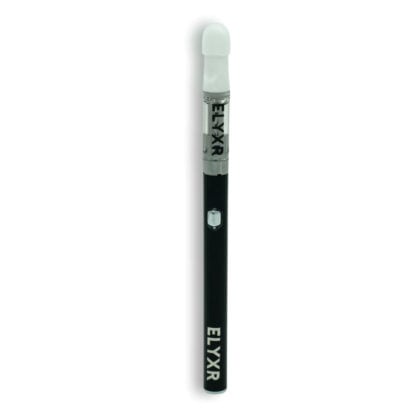
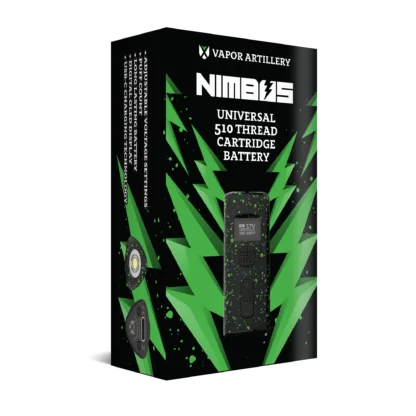
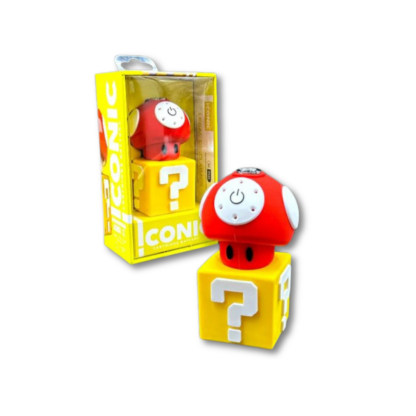
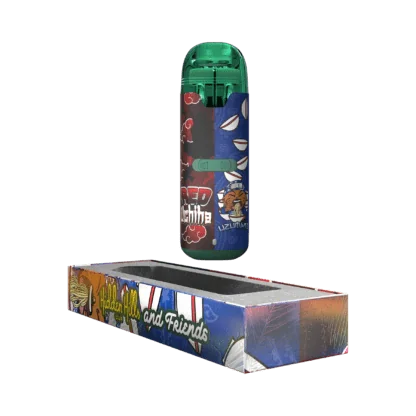
A cart battery is the half of a vape setup that does the work. It holds charge, delivers voltage to the cartridge’s coil, and determines how hot that coil runs. These are 510 thread devices, which is the common connector for pre-filled cartridges, and they contain no cannabinoids or botanical ingredients of any kind. Fit, voltage control and electrical build quality are what separate them. The guide below covers all three, along with the contact problem behind most batteries that seem to have died.
A Battery Is Not a Cartridge, and the Distinction Matters for Compliance
This collection holds hardware only. A cart battery is a lithium-ion cell, a circuit board and a threaded connector. There is no oil in it, no cannabinoid, no alkaloid and nothing to test.
That is worth stating plainly because the shelf next to this one is governed by an entirely different body of rules. Our cartridge and disposable collections carry dated notes about the federal hemp definition, total THC measurement and per-container caps. None of that reaches a battery. There is no certificate of analysis for a power supply.
What applies here is age restriction at 21 and over, the handful of state and local rules covering vaping device sales, which we handle at checkout, and ordinary consumer electronics judgment.
How 510 Thread Fit Actually Works
The 510 connector takes its name from its thread dimensions, ten threads across five millimeters. No standards body ever published it. Early manufacturers converged on the same geometry and the market settled there, which is why compatibility is broad but not absolute.
Three dimensions vary between manufacturers even when the threading matches. Center pin depth decides whether electrical contact is made at the point the threads seat. Cartridge base length decides whether the cart bottoms out early. And the battery collar’s inner diameter decides whether a wide cartridge physically fits at all.
Practical version. Measure or check the stated diameter of the cartridges you buy against the battery’s opening, since a slim pen built around narrow glass carts will not accept a wide ceramic one. Then tighten to snug and stop. If a connection needs force, the geometry is wrong, and pushing through it crushes center pins and strips threads. Several devices in this collection use a magnetic adapter instead, which sidesteps the thread question but introduces its own: adapters are not interchangeable between brands.
Voltage, Preheat and What the Settings Do
The simplest batteries in this collection fire at one fixed voltage, usually somewhere around 3.3 to 3.7 volts. Variable voltage devices let you select, typically across three or four steps.
Voltage sets how much power reaches the coil, so it sets temperature. Lower voltage produces less vapor and preserves more of the terpene character, because terpenes are volatile and burn off before cannabinoids do. Higher voltage produces more vapor and a harsher draw. Neither setting is correct in the abstract, and the right one depends on the cartridge’s coil resistance and the viscosity of what is in it.
Preheat is a separate function and it solves a real problem. Thick oil in a cold cartridge does not wick into the coil properly, which gives you a weak first draw and sometimes a burned second one. Preheat applies low power for a few seconds to thin the oil without vaporizing it. Cold weather and dense distillates are when it earns its place.
A note on the catalog. One listing in this collection, the CCELL Silo 510 Battery, currently shows a price of zero, which is a store configuration issue rather than a promotion. We have flagged it for the team.
Reading mAh Correctly
Capacity in milliamp hours is the most misread number in vape hardware. It tells you how long the device runs between charges. It tells you nothing about output.
A 350 mAh pen and a 900 mAh device set to the same voltage, firing the same cartridge, deliver the same draw. The larger one does it more times. Output is a function of voltage and coil resistance, full stop.
Where capacity does matter is in pattern of use. If you charge daily anyway, a small, pocketable 350 mAh device costs you nothing. If you are away from power for long stretches, or you share a device, the larger cell is the difference between a working setup and a dead one. Pass-through charging, where the device fires while plugged in, matters more than raw capacity for anyone who works at a desk.
Charging and Battery Safety
These are lithium-ion cells and they deserve the same handling as any other.
Use the supplied cable or a known-good USB-C source. Avoid high-output fast chargers, which many of these small circuits are not designed to accept. Unplug at full rather than leaving the device on the charger overnight, because time spent sitting at full charge is what degrades capacity fastest. Keep devices out of hot cars, away from direct sun and off radiators. Never carry a loose cell in a pocket with keys or coins; a short across the terminals is the failure that starts fires.
Retire a battery that becomes hot to the touch in normal use, that swells or distorts, or that no longer holds charge past a few draws. Dispose of it at a battery recycling point. Lithium cells in household waste are a genuine hazard to collection crews.
The Contact Problem Behind Most Dead Batteries
Before concluding that a battery has failed, clean the contact. Residue migrates from the cartridge onto the battery’s center pin, insulating it. The device charges normally and indicates charge, but will not fire or fires intermittently.
A dry cotton swab on the center pin and on the cartridge’s base clears it. Never use liquid on an electrical contact, and never scrape with metal. On a magnetic adapter, the same applies to both faces of the magnet.
Store devices upright with the cartridge attached, or detached and capped, out of reach of children and pets. Oil migrating into a mouthpiece is a storage problem, not a product defect.
FAQ's
What does 510 thread mean?
It describes the connector’s dimensions, ten threads across five millimeters. It became the standard connector for pre-filled cartridges through manufacturer convergence rather than through a published specification, which is why compatibility is broad but not guaranteed across every brand combination.
Will every cartridge fit these batteries?
Most will. Thread pitch is consistent, but center pin depth, base length and collar diameter vary by manufacturer. A wide ceramic cartridge may not seat in a slim pen built for narrow glass. Check diameters before buying, and tighten only to snug, since forcing a connection damages pins and threads.
Does a higher mAh battery hit harder?
No. mAh is runtime between charges, not power. At the same voltage with the same cartridge, a 350 mAh and a 900 mAh device deliver an identical draw. Output comes from voltage and the coil’s resistance. Choose capacity by how often you can charge, not by expected strength.
What is preheat for?
Thick oil in a cold cartridge does not wick into the coil properly, which produces a weak draw and can scorch the wick. Preheat applies low power briefly to thin the oil without vaporizing it. It is most useful in cold weather and with dense distillates, and unnecessary with thin oils in a warm room.
Which voltage should I use?
It depends on the cartridge’s coil resistance and oil viscosity, so it is worth trying the range. Lower voltage gives less vapor and retains more terpene character, since terpenes volatilize before cannabinoids. Higher voltage gives more vapor and a harsher draw. Start low and step up rather than the reverse.
My battery charges but will not fire. Is it broken?
Often not. Residue on the center pin insulates the contact, so the device charges and indicates charge while failing to fire. Clean the pin and the cartridge base with a dry cotton swab. Do not use liquid or metal on contacts. If it still fails, or runs hot or swollen, retire it.
How should I charge these safely?
Use the supplied cable or a known-good USB-C source rather than a high-output fast charger. Unplug at full instead of leaving it overnight, since time at full charge degrades capacity. Keep devices out of hot cars and direct sun, and never carry a loose cell with keys or coins in a pocket.
Do hemp law changes affect cart batteries?
No. The federal hemp definition changes govern cannabinoid measurement and per-container limits. A battery contains no cannabinoid and has nothing to measure. Those dates apply to the cartridges and disposables you pair with it, not to the hardware itself.