







HHC Gummies: What They Are, Effects and Legality
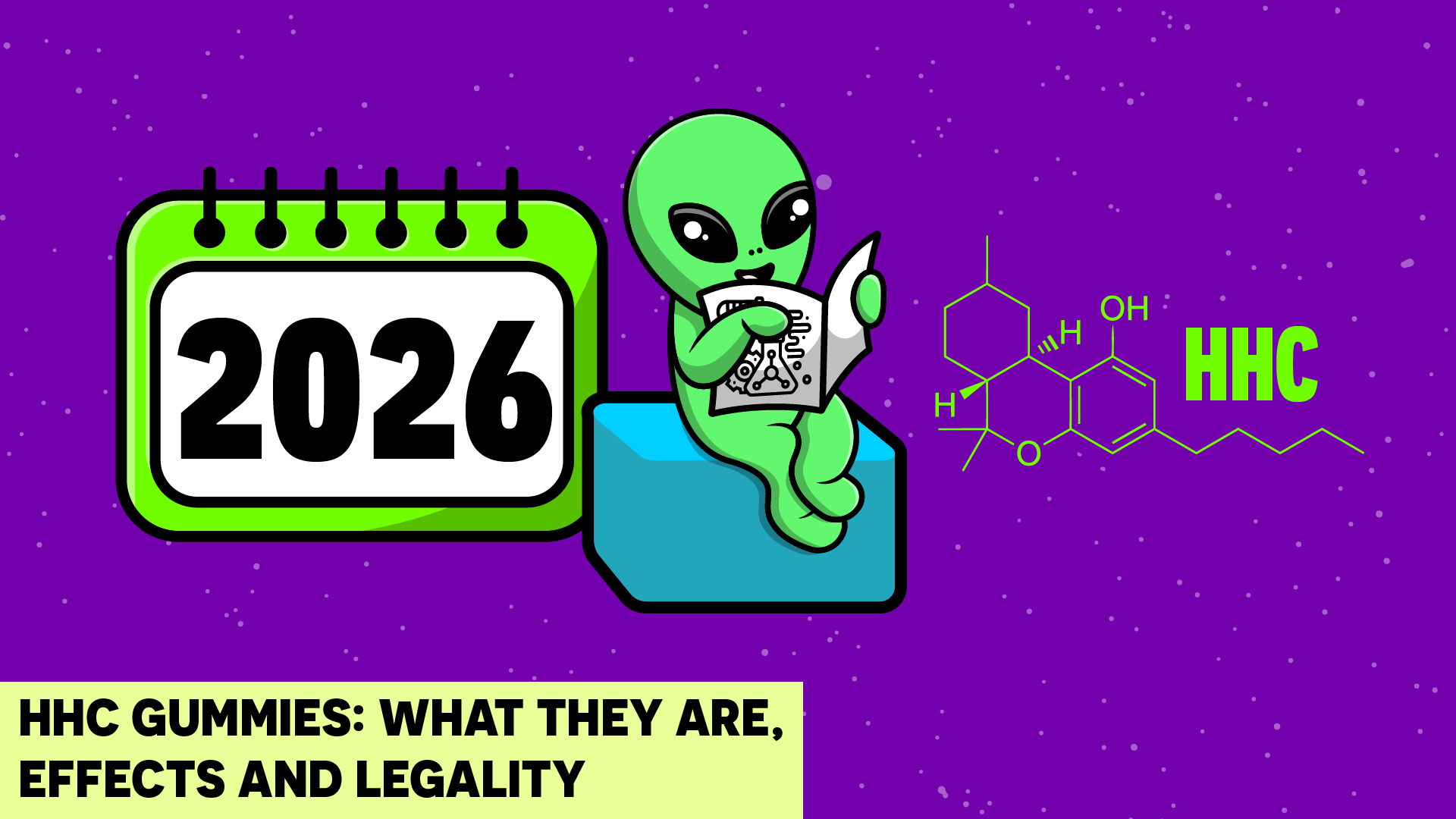
If you’ve seen HHC gummies mentioned online and are trying to figure out whether they’re worth looking into, the most important thing to know upfront is that this is a compound whose legal footing has shifted significantly in 2026. What used to be a fairly straightforward, if legally gray, hemp product category is now something you need to approach with real caution. Here’s the full picture, both the chemistry and the current legal reality.
What HHC Actually Is
Hexahydrocannabinol, HHC, is a hydrogenated form of THC, created by adding hydrogen atoms to THC’s molecular structure through a chemical process. It’s a naturally occurring cannabinoid in trace amounts, but virtually every HHC product sold commercially is produced semi-synthetically, converted from hemp-derived CBD through a multi-step chemical process rather than extracted directly from the plant in meaningful quantities.
This distinction, naturally occurring versus produced through chemical conversion, isn’t just a technical detail. It has turned out to be central to HHC’s entire legal story.
What the Effects Were Reported to Be
For context on why HHC built a following in the first place, users generally described its effects as somewhat milder than Delta-9 THC, often estimated at somewhere around 70 to 80 percent of Delta-9’s potency, producing a clear-headed euphoria without as much of the heavier cognitive impairment some users report from strong Delta-9 products. Reported effects included body relaxation, mood lift, and mild appetite stimulation, with onset generally in the thirty-to-ninety-minute range typical of edibles, and effects lasting four to six hours with some residual effect reported up to twelve hours afterward.
This effects profile is part of why HHC gummies became popular as a middle-ground option, but understanding what the product used to offer doesn’t change what matters most right now: whether it’s something you should be buying today.
The Legal Status Has Changed, and Changed Significantly
This is the part that anyone researching HHC in late 2026 needs to understand clearly. In May 2026, the DEA published a final rule giving hexahydrocannabinol its own specific listing under Schedule I of the Controlled Substances Act, with its own dedicated drug code. The rule took effect immediately upon publication, without a standard notice-and-comment period, and the DEA’s stated position is that HHC was already a Schedule I substance under existing law, since it falls within the broader legal definition of “tetrahydrocannabinols,” a category already scheduled. The agency’s argument is specifically that HHC produced through chemical conversion, even when that conversion starts with legally sourced hemp CBD, doesn’t qualify for the hemp exception that covers naturally occurring cannabinoids within legal THC limits.
This DEA action exists alongside a separate, broader change affecting the entire hemp industry. Federal legislation passed in late 2025 redefined “hemp” itself, and a provision specifically targeting cannabinoids that cannot be naturally produced by the cannabis plant, which HHC falls squarely into given how it’s actually manufactured, causes those products to lose hemp status entirely as of November 12, 2026. This runs on a stricter timeline than the broader hemp product compliance deadline, which was pushed to December 11, 2026 for products that don’t involve this kind of synthetic conversion.
Put plainly: HHC currently sits in Schedule I according to the DEA’s own stated position, and separately, the broader legal hemp framework is closing the door on it entirely within the same general window. There is ongoing legal debate among cannabis attorneys about whether the DEA’s interpretation will hold up if challenged, and some industry voices argue the underlying statute doesn’t clearly support the agency’s position. But that legal debate is happening in courtrooms and policy circles, not at the point of sale, and it does not change the practical reality for a consumer trying to decide whether to buy an HHC product today.
Why This Matters More Than It Might for Other Cannabinoids
A lot of hemp-derived cannabinoids exist in some degree of regulatory gray area, and reasonable people can disagree about how cautious to be with any given one. HHC is different right now because a federal agency has taken an explicit, public position that it’s a controlled substance, not merely an unclear or unaddressed one. That’s a meaningfully higher-risk category than a cannabinoid whose status simply hasn’t been directly addressed yet.
What This Means If You’re Considering HHC Products
Given where things currently stand, purchasing or possessing HHC products carries legal risk that didn’t exist to the same degree even a year ago. This isn’t a case of “check your state’s rules,” the way it is for kratom or Amanita, where the core federal picture is settled and state law is the variable. Here, the federal picture itself is the source of the uncertainty, with an agency actively asserting the substance is already illegal nationwide.
If you already have HHC products, or you’re seeing them still available for sale somewhere, the responsible approach is treating this as a rapidly closing window rather than a stable product category, and looking toward alternatives with clearer legal footing instead.
What to Look at Instead
If what drew you to HHC was its middle-ground effects profile, milder than Delta-9 but more pronounced than CBD, hemp-derived Delta-9 THC products formulated at a lower, more moderate dose can offer a comparable experience while sitting on much more stable legal ground, since Delta-9 is naturally occurring in the cannabis plant and isn’t subject to the same “cannot be naturally produced” provision that’s specifically targeting compounds like HHC. THCA products, though also facing their own regulatory changes under the broader 2026 hemp redefinition, are a separate conversation with a different timeline and different underlying issues.
A Few Common Questions
Q. Is HHC illegal in every state right now?
The DEA’s position is that it’s federally Schedule I, which would apply nationwide regardless of any individual state’s hemp laws, though the legal interpretation is actively disputed by parts of the industry and hasn’t been fully tested in court.
Q. Why did HHC exist as a legal product for years before this changed?
It operated in a gray area based on the argument that it was hemp-derived and therefore covered under the 2018 Farm Bill’s hemp exception. The DEA’s 2026 action and the broader hemp redefinition both directly challenge that argument.
Q. Is naturally occurring HHC treated differently from synthetic HHC?
The DEA’s stated position is that commercially produced HHC, made through chemical conversion, doesn’t qualify for any natural-hemp exception, regardless of the fact that trace natural HHC exists in the plant.
Q. Could this legal status change again?
It’s possible, given the active legal disputes and the broader hemp legislation still evolving as of late 2026. But planning around a possible future reversal isn’t a substitute for understanding the actual legal risk that exists right now.
The Bottom Line
HHC gummies offered a genuinely distinct effects profile for the years they operated in the market, but as of 2026, the compound sits in a fundamentally different legal position than it used to, with the DEA treating it as an already-controlled Schedule I substance and separate hemp legislation closing off any remaining argument for its legal status by November 12, 2026. Whatever HHC used to offer, the responsible starting point today is understanding that legal ground has shifted, and shifted hard, underneath this specific compound.