








Do THC Gummies Expire? Shelf Life and Storage Tips
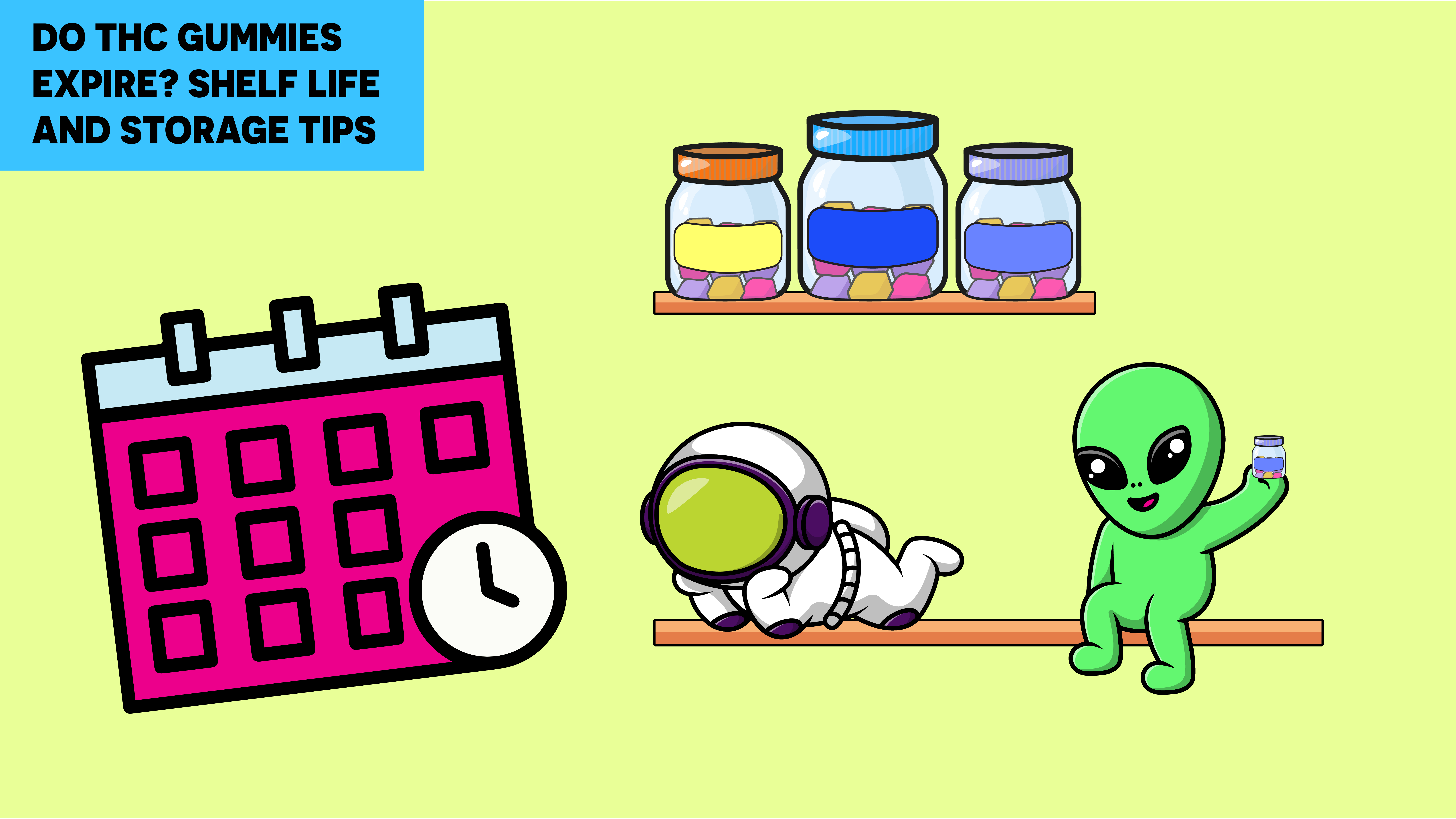
Found a bag of THC gummies buried in a drawer from a year ago and wondering if they’re still good? You’re not alone in asking, and the answer is more nuanced than a simple yes or no. THC gummies do expire, the same as any food product, but how quickly depends heavily on how they were stored, and the difference between careless and careful storage can mean the difference between a product that’s still perfectly fine and one that’s lost most of its potency or gone bad entirely.
Yes, They Expire, But Not Quickly If Stored Well
Most THC gummies have a realistic shelf life of twelve to twenty-four months when stored under reasonable conditions. That’s a meaningfully longer window than a lot of people assume, and it means a gummy from a few months ago sitting in a drawer is very likely still fine, while one that’s been baking in a hot car for a summer is a different story entirely, regardless of how much time has technically passed.
The wide range in that estimate, twelve months on one end and twenty-four on the other, comes down almost entirely to storage conditions rather than the product itself varying that much between brands.
What Actually Degrades Over Time
Two separate things happen as a THC gummy ages, and they’re worth understanding as distinct issues. First, the cannabinoid content itself slowly degrades over time, meaning an older gummy may deliver a somewhat weaker effect than a freshly made one, even if it still looks and tastes completely normal. Second, and separately, the gummy as a food product can go bad in the way any candy or gummy product can, through texture changes, moisture loss or absorption, or in worse cases, actual mold growth if it’s been stored somewhere humid.
These two forms of degradation don’t always happen at the same rate, which is why a gummy can look and taste fine while having noticeably reduced potency, or conversely why a product might show physical signs of aging well before its cannabinoid content has degraded significantly.
The Storage Factors That Actually Matter
A handful of specific conditions determine where in that twelve-to-twenty-four-month range your gummies actually land, and nearly all of them are within your control.
Light exposure accelerates cannabinoid degradation, which is exactly why keeping gummies in a dark location, rather than somewhere sunny or under continuous artificial light, extends their usable life meaningfully compared to leaving them out in the open.
Heat is arguably the biggest factor working against shelf life. Storing gummies in a cool location rather than somewhere warm, and specifically avoiding hot environments like a car interior during summer months, has an outsized effect on how long they stay both potent and physically stable.
Humidity and air exposure affect the gummy as a food product specifically, beyond just cannabinoid content. An airtight container protects against both moisture getting in, which can lead to texture problems or mold, and moisture escaping, which can leave gummies hard, dry, or stale well before their cannabinoid content has meaningfully degraded.
Does Refrigeration or Freezing Actually Help
Refrigeration can extend shelf life meaningfully, provided the gummies are kept in a genuinely airtight container while chilled. Refrigerating gummies in a container that isn’t properly sealed can actually work against you, since the fridge environment introduces its own moisture and condensation risk that can degrade gummy texture faster than room-temperature storage would in a good airtight container.
Freezing is the most aggressive option for long-term storage, and it can extend usable shelf life to a year or considerably more when done properly. The key detail here is using genuinely freezer-safe, airtight packaging, since freezer burn from improper storage can damage texture and quality even if cannabinoid content itself holds up reasonably well in cold storage.
Signs Your Gummies Have Actually Gone Bad
A few specific signs are worth watching for, separate from the general question of how much time has passed. Noticeable texture changes, gummies that have become unusually hard, unusually sticky, or unusually dry compared to how they started, are a clear sign of quality decline, even if they’re not necessarily unsafe to eat. Any visible fuzzy spots, white patches, or anything resembling mold growth is a clear signal to discard the product immediately rather than trying to salvage it, regardless of how recently you purchased it.
A noticeably weaker effect than you remember from a fresher batch of the same product is a sign of cannabinoid degradation specifically, which isn’t a safety issue in the way mold is, but does mean you may need to adjust your expectations or dosage compared to when the product was fresh.
Practical Storage Setup That Actually Works
Based on everything above, a simple, effective storage approach comes down to a few consistent habits: keep gummies in their original packaging or transfer them to a genuinely airtight container, store that container somewhere cool and dark rather than somewhere warm or sunny, and consider refrigeration or freezing specifically if you’re storing a larger quantity over a longer period rather than something you’ll finish within a few weeks or months.
Avoiding the obvious mistakes, leaving gummies in a hot car, storing them in an open bowl exposed to air and light, or forgetting about them in a humid bathroom cabinet, accounts for most of the difference between a product that lasts the full two years and one that noticeably degrades within a few months.
A Few Common Questions
Q. Is it safe to eat THC gummies past their printed expiration date?
In most cases, gummies past their date aren’t unsafe as long as there’s no visible mold, unusual smell, or significant texture change, though potency may be somewhat reduced compared to when they were fresh.
Q. Do THC gummies lose potency faster than CBD gummies?
Both THC and CBD are cannabinoids subject to similar degradation processes over time, so the general shelf life principles discussed here apply similarly to both, with storage conditions mattering more than which specific cannabinoid is involved.
Q. Can I tell if a gummy has lost potency just by looking at it?
Not reliably. Potency degradation and physical appearance don’t always change at the same rate, which is why a gummy can look completely normal while delivering a noticeably weaker effect than it did when fresh.
Q. Does the type of THC in the gummy affect how long it lasts?
The general shelf life principles apply broadly across different cannabinoid types, though formulation differences between products, including other ingredients and how the gummy itself is made, can influence specific shelf life somewhat more than the particular cannabinoid used.
The Bottom Line
THC gummies do expire, typically within a twelve-to-twenty-four-month window, but proper storage, cool, dark, and airtight, is what determines whether you land on the longer or shorter end of that range. Paying attention to texture changes and any sign of mold matters more than fixating on an exact date, and a few consistent storage habits will do more to protect both safety and potency than almost anything else you could do after the gummies are already made.