







Mushroom Tea vs. Chocolate vs. Gummies: Onset and Format Differences
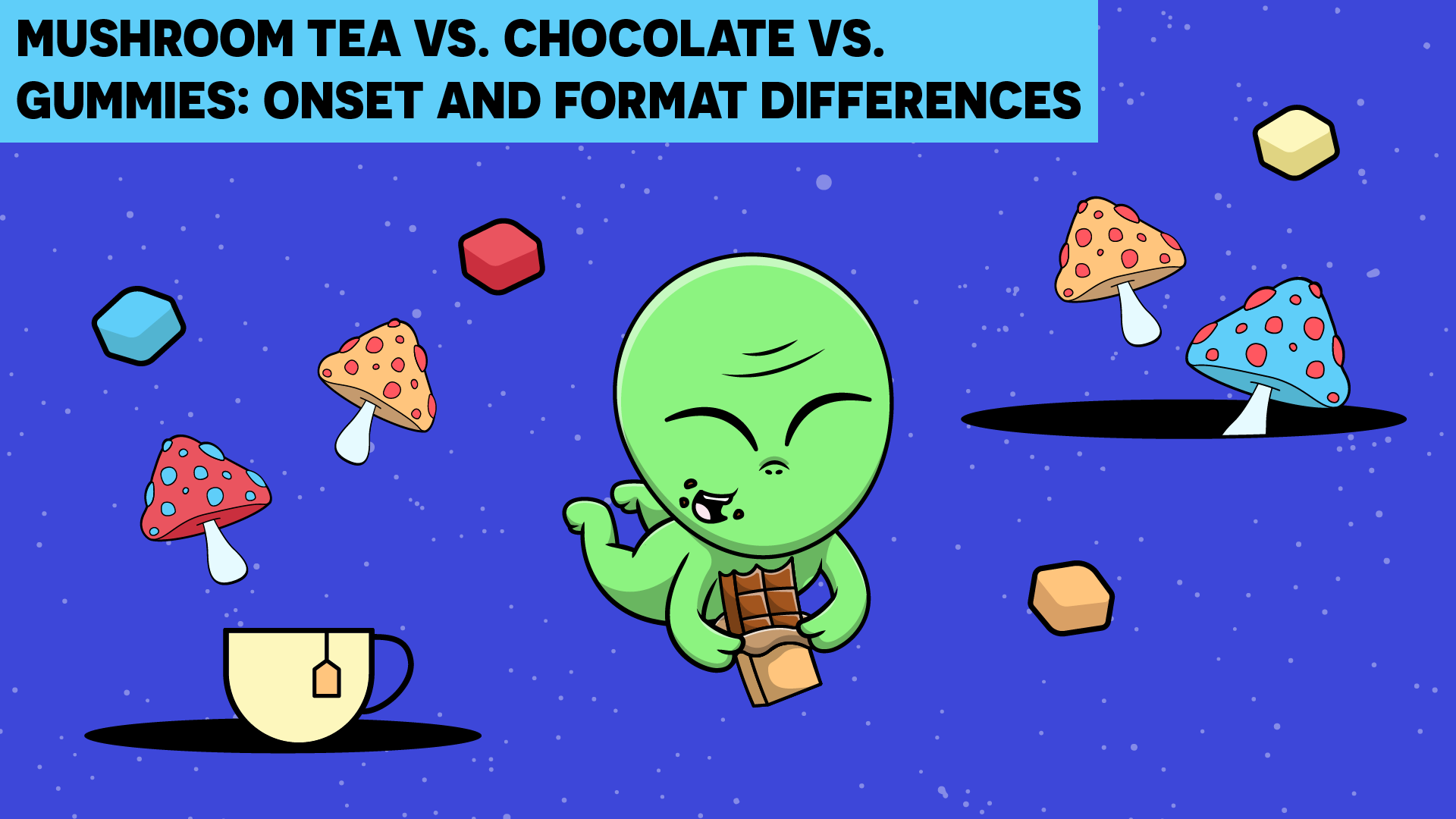
Anyone who has tried more than one mushroom product format has probably noticed something that doesn’t quite add up at first. Two products with what seems like a similar potency on the label can feel completely different depending on whether you drank it, ate it as chocolate, or chewed a gummy. That difference isn’t random or a matter of imagination. It comes down to how your digestive system processes each format, and the timeline differences are large enough to actually plan around.
This applies broadly across mushroom product categories, including Amanita-based products, which is the legal, widely available category most people mean when they talk about mushroom gummies, chocolate, or tea today.
Why Format Changes Everything Before Potency Even Matters
Before getting into the specific formats, it helps to understand the general principle at play. Anything you consume orally has to survive your stomach, get processed, and get absorbed into your bloodstream before you feel anything. How fast and how completely that happens depends heavily on what else is in the product with the active compound and what state your digestive system is in when you take it.
This is why oral formats in general are slower and less predictable than something absorbed more directly, and it’s also why three different oral formats, tea, chocolate, and gummies, can still produce noticeably different timelines from each other despite all being swallowed and digested.
Mushroom Tea: The Fastest of the Oral Formats
Tea has a real advantage when it comes to onset speed, and the reason is straightforward. When you drink tea, the active compounds are already dissolved in liquid rather than locked inside a solid matrix your body has to break down first. Liquid moves through your stomach and into your small intestine, where most absorption happens, considerably faster than solid food does.
This generally puts tea on the faster end of the oral spectrum, though it’s still slower than inhalation methods like vaping, which bypass digestion entirely. Most people report feeling initial effects from mushroom tea somewhere in the thirty to forty-five minute range, though this varies with concentration, how it was brewed, and individual digestion speed.
The tradeoff with tea is precision and portability. It’s harder to dose consistently cup to cup compared to a pre-measured gummy or chocolate piece, and it obviously requires more preparation and isn’t something you can casually carry around the way an edible is. For people who prioritize a faster, more predictable onset over convenience, though, tea is generally the strongest oral option available.
Gummies: The Middle Ground
Gummies sit in the middle of the format spectrum, and this is where a lot of confusion about “why did this take so long to kick in” tends to originate. A gummy is a solid that your stomach needs to break down before the active compound can be absorbed, which inherently slows things down compared to a liquid like tea.
That said, gummies generally break down faster than chocolate specifically, because they don’t contain the fat content that chocolate does. Most reports place gummy onset somewhere between thirty minutes and an hour and a half, with a lot of variability depending on whether you’ve eaten recently, your individual metabolism, and the specific formulation of the product.
The appeal of gummies is obvious: consistent, pre-measured dosing in a format that’s easy to transport, easy to take discreetly, and doesn’t require any preparation. The tradeoff is a slower and somewhat less predictable onset compared to tea, and a duration that tends to run longer once effects do arrive, since the gradual digestion that delays onset also tends to extend how long the effects stick around.
Chocolate: The Slowest, and Why That’s Not Necessarily a Downside
Chocolate is consistently the slowest of the three formats to produce noticeable effects, and the reason comes down to fat. Chocolate contains a meaningful amount of fat, which significantly slows gastric emptying, the rate at which your stomach passes its contents into the small intestine where absorption actually happens. The active compounds are essentially along for a slower ride through your digestive system.
Reports on chocolate onset commonly range from forty-five minutes on the faster end up to two hours or more, depending on the specific fat content of the product, how much you’ve eaten that day, and individual factors. This is a substantially wider and slower window than either tea or gummies typically show.
What chocolate loses in speed, it can make up for in a more gradual, sustained experience for people who prefer that to a faster, more sudden onset. It also has the practical advantage of being easy to store and transport, similar to gummies, without the preparation tea requires.
Putting the Three Side by Side
If you lined up all three based purely on how quickly they tend to produce effects, tea generally comes first, gummies land in the middle, and chocolate trails as the slowest, with the caveat that individual variation is significant enough that these are general patterns rather than guarantees for any specific person or product.
Duration tends to run in something close to the opposite direction. Formats that take longer to kick in due to slower digestion also tend to extend the overall window of effects, since the same slow absorption that delays onset also spreads out how the compound enters your system over time, rather than all at once.
Why Consistency Matters More Than the Format Itself
Regardless of which format you’re using, the single biggest variable affecting how predictable your experience is comes down to consistency in how you take it. Taking the same format on an empty stomach one time and after a large meal the next time will produce noticeably different onset windows even with the identical product, which is often mistaken for the product itself being inconsistent when it’s actually a difference in how it was taken.
This is part of why experienced users tend to stick with one format and pay attention to their own patterns with it, rather than switching formats frequently and trying to compare timelines across fundamentally different digestion processes.
A Few Common Questions
Q. Does taking a product on an empty stomach always mean faster onset?
Generally yes, across all three formats, since there’s less material in your digestive system competing for absorption. This effect tends to be most noticeable with tea and least dramatic, though still present, with chocolate given its already slower baseline.
Q. Is a faster onset format automatically stronger?
No. Onset speed and total potency are different things. A product that hits faster isn’t necessarily more potent, it’s simply being absorbed on a different timeline based on its format.
Q. Why do two gummies from different brands have different onset times?
Formulation differences, including other ingredients in the gummy, exact potency, and manufacturing process, all affect absorption speed even within the same general format category.
Q. Is there a format that skips digestion entirely?
Vaping is the main example, since inhalation absorbs compounds through the lungs rather than the digestive tract, typically producing effects within minutes rather than the thirty-minute-plus windows common to tea, gummies, and chocolate.
The Takeaway
Tea, gummies, and chocolate are not just different ways of packaging the same experience. The format directly shapes how fast your body absorbs what’s inside, and understanding that timeline, tea generally fastest, gummies in the middle, chocolate slowest, helps set realistic expectations rather than assuming something isn’t working just because it hasn’t kicked in as quickly as a different format did last time.