






Can You Fly With THC Gummies? A 2026 Traveler’s Guide to U.S. and International Rules

You packed your toothbrush, your charger, and a small jar of THC gummies for the flight. The question hits at the security line: can I actually have these on me? The answer is more layered than most travelers realize. Hemp-derived and marijuana-derived gummies follow different rules. Federal law disagrees with most state laws. International borders add another layer entirely. Here’s what’s actually permissible in 2026, and what isn’t worth the risk.
The Federal Reality at 30,000 Feet
Air travel in the United States is governed by federal law, even on flights that never leave a single state. That matters because federal law treats marijuana-derived THC and hemp-derived THC very differently. Marijuana-derived THC (cannabis with more than 0.3% Delta-9 THC by dry weight) remains a Schedule I controlled substance under federal law.
Even in states where recreational cannabis is fully legal, possession on federal property, including airports and aircraft, is a federal violation. Hemp-derived THC products (≤0.3% Delta-9 THC by dry weight, including most Delta-8 and Delta-9 hemp gummies on the wellness market) are federally legal under the 2018 Farm Bill, but the rules at airports aren’t as clean-cut as the rules at your local hemp shop.
The takeaway: the moment you step into an airport, “legal in my state” stops being the relevant standard. Federal rules set the floor.
What TSA Is Actually Looking For?
TSA’s published policy is direct: their officers are looking for threats to aviation security, not contraband. Marijuana and certain cannabis-infused products aren’t their primary focus. In practice, TSA does not actively search passengers for marijuana or other illegal drugs. If a TSA officer finds a substance they suspect violates federal law during routine screening, they refer the matter to local law enforcement. Hemp-derived products containing no more than 0.3% THC are explicitly permitted, as are FDA-approved cannabis products.
That doesn’t mean the TSA is running gummies through a cannabinoid lab at the checkpoint. But it does mean a bag may get flagged, opened, and inspected if its contents look unusual on the X-ray, and the decision tree from there depends on the officer, the airport, and the local police jurisdiction.
Hemp-Derived vs Marijuana-Derived: The Distinction That Matters
If you remember one thing from this guide, make it this: the legal status of your gummies depends almost entirely on their source, not their effect. A 10mg Delta-9 gummy from a federally compliant hemp brand (with a COA confirming ≤0.3% THC by dry weight at the product level) is federally legal to travel with under the Farm Bill. A 10mg Delta-9 gummy from a marijuana dispensary in a recreational state is federally illegal to bring through TSA, even if the gummies are physically identical at the molecular level.
Two gummies, same milligrams, same effect, completely different legal categories. The packaging, the COA, and the brand’s source documentation are what separate them. If you’re traveling with hemp-derived products available at ELXYR, keeping them in their original packaging with the lab report accessible, a QR code on the label or a saved PDF on your phone is enough in most situations.
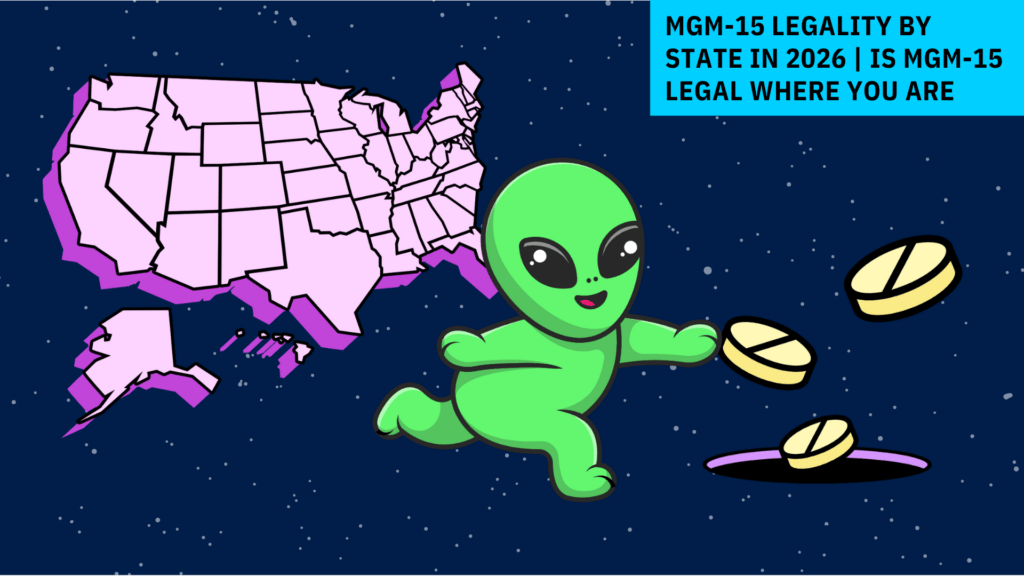
Domestic Flights: A State-by-State Risk Map
Even with hemp-derived products, the real-world risk varies by airport. A few patterns to keep in mind for 2026.
Recreational-cannabis states (California, Colorado, Illinois, Michigan, New York, Oregon, Washington, and others) generally see local airport law enforcement uninterested in hemp-derived gummies, and many won’t pursue marijuana possession in small personal-use quantities.
Medical-only or hemp-only states are typically fine for hemp-derived products with proper documentation; anything marijuana-derived can become an issue if local police are called.
Strict states (Idaho, Kansas, Mississippi, parts of the South) are where even hemp-derived Delta-8 or Delta-9 gummies can run into trouble, because some of these states have banned or restricted those product categories outright.
A gummy that’s federally legal can still be locally illegal at the destination airport.
The simple framework: your origin airport, your destination airport, and federal law all need to align. If any of the three is a problem, your gummies are a problem.
International Travel: Why Borders Almost Always Mean “Leave It Home”
International travel is where things change sharply. The Farm Bill is U.S. law. It does not extend across borders. Most countries, including Canada (despite legalized cannabis), the U.K., the E.U., Mexico, Japan, and the U.A.E., treat any THC-containing product as a controlled substance subject to their own customs and drug laws.
Canada has legalized cannabis domestically but bans carrying it across the border in either direction. The U.K. and E.U. broadly tolerate hemp-derived CBD; THC-containing edibles are not. Some E.U. countries enforce strict thresholds (often 0.2% THC) and customs that don’t assume good faith. Asia (Japan, Singapore, South Korea) imposes severe penalties for THC possession, including detention and prosecution, even a single gummy isn’t worth the risk. The Middle East (U.A.E., Saudi Arabia) has some of the most severe penalties in the world; travelers have been prosecuted for trace amounts found in their luggage.
The safe rule: don’t fly internationally with any THC product, hemp-derived or otherwise. What you save on the cost of replacements at your destination is not worth the legal exposure.
Smart Travel Tips for Domestic Flyers
If you’re staying within the U.S. with hemp-derived gummies, a few practical habits reduce risk. Keep the original packaging, a sealed jar with a clearly visible “hemp-derived” label and a COA reference signals legitimacy if TSA or law enforcement asks. Save the COA on your phone; if a question comes up, you want lab documentation in 30 seconds, not 30 minutes of searching.
Stay under personal-use quantities, a few gummies for personal use looks different from a case of jars. Use carry-on so you’re with your products if questions arise. And skip the edible if any leg of your trip is internationally bound, the moment a connection routes through a non-U.S. customs zone, the rules change.
The Bottom Line
Can you fly with THC gummies? Domestically, yes, if they’re hemp-derived, federally compliant, properly labeled, and you’re flying between states that don’t have restrictive product bans. Marijuana-derived gummies remain federally illegal regardless of state law, and international travel with any THC product is almost universally a bad idea. The rule that travels well: when in doubt, it’s hemp, it’s labeled, and the COA is one tap away. If even one of those three isn’t true, the gummies stay home.
Every hemp-derived gummy at ELYXR ships with a scannable COA so you can verify cannabinoid content before, during, and after travel.