


A Complete Guide to Cannabis Leaf Anatomy, Function, Uses, and What It Tells You
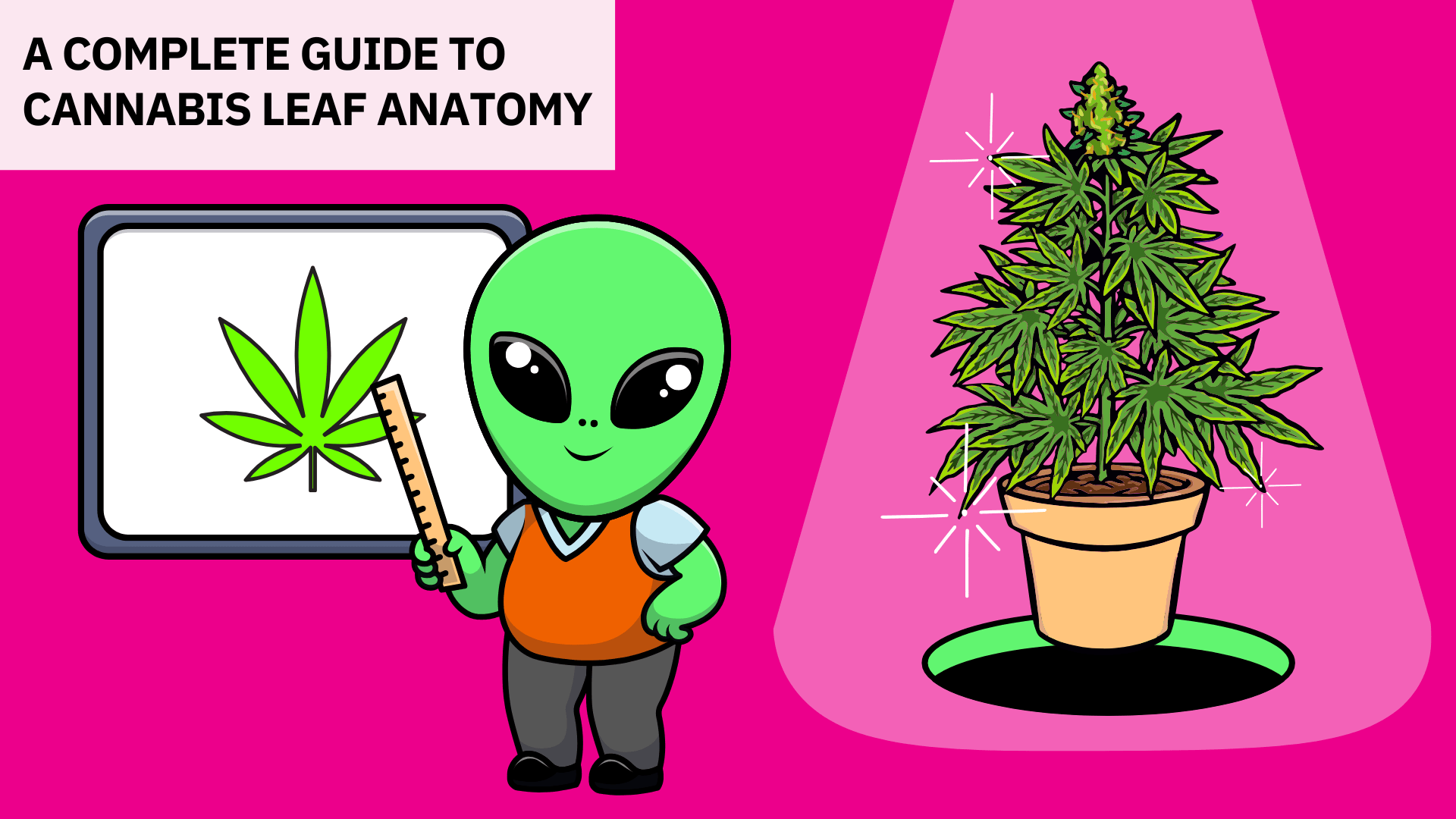
The weed leaf is one of the most recognizable plant symbols in the world.
You see it on packaging, clothing, stickers, dispensary logos, wellness products, and cannabis education websites. Even people who have never used cannabis can usually recognize the classic pointed leaf shape.
But here is the interesting part.
Most people recognize the cannabis leaf, but they do not really understand it.
A weed leaf is not just a symbol. It is an important part of the cannabis plant’s growth system. It helps the plant capture light, breathe, move water, make energy, and signal health problems. It also tells growers and consumers a lot about the plant’s stage, condition, and type.
This guide breaks down the parts of the cannabis plant with a special focus on the weed leaf. We will cover what the leaf does, its main parts, the difference between fan leaves and sugar leaves, how leaves relate to cannabinoids, and why the leaf is not the same thing as the cannabis flower.
The Cannabis Plant at a Glance
Before focusing on the leaf, it helps to understand the whole plant.
Cannabis is a flowering plant. Like other flowering plants, it has roots, stems, leaves, nodes, flowers, seeds, and reproductive structures. The stem supports the plant and moves water and nutrients. Leaves help with photosynthesis. Flowers are the resin-rich parts most often harvested for cannabinoids and terpenes.
In basic plant anatomy, stems support leaves and flowers, move water and dissolved substances between roots and shoots, and contain nodes where leaves attach. Nodes are also where new growth can form.
Cannabis has both vegetative and flowering parts. The leaves and stems help the plant grow. The flowers are where most of the resin-rich trichomes are found, especially on mature female plants. Hashish, for example, is made from cannabinoid-rich glandular trichomes, and mature female flowers contain the highest concentration of those trichomes.
That distinction matters.
The leaf helps the plant grow. The flower is usually where most consumers focus because it contains more resin, cannabinoids, and aroma compounds.
What is a Weed Leaf?
A weed leaf is the leaf of the cannabis plant.
It is usually long, narrow, serrated, and divided into multiple pointed leaflets. The classic cannabis leaf often has five, seven, nine, or more “fingers,” although the number can vary by genetics, growth stage, and plant health.
From a botanical view, a leaf usually includes a blade, petiole, veins, and sometimes stipules. A complete leaf in flowering plants can include a petiole, lamina or leaf blade, stipules, and sometimes a sheath, although not every plant has all of these parts.
For cannabis, the visible parts most people notice are:
- The leaflets or fingers.
- The serrated edges.
- The central vein or midrib.
- The petiole or leaf stalk.
- The veins spreading through the leaf.
These parts work together to help the plant capture light and move resources.
Why Weed Leaves Matter?
Leaves are the plant’s solar panels.
They capture light and help turn it into energy through photosynthesis. The flat part of the leaf contains chloroplast-rich tissue that supports photosynthesis, while veins help move water, nutrients, and sugars through the leaf.
For cannabis, healthy leaves are essential.
If the leaves are green, strong, and well-shaped, the plant is usually able to collect light efficiently. If leaves are yellow, curled, spotted, burnt, or drooping, something may be wrong with water, nutrients, light, pests, disease, or environment.
A weed leaf can tell a story.
It can show whether the plant is thriving, stressed, overfed, underwatered, overheated, or nearing the end of its life cycle.
Main Parts of the Weed Leaf
The cannabis leaf may look simple at first glance, but it has several important parts.
Leaflets
The “fingers” of the weed leaf are leaflets.
A cannabis leaf is often palmately compound, meaning multiple leaflets spread out from one point like fingers from a hand. This is why cannabis leaves have such a recognizable shape.
Leaflet count can vary. Young cannabis plants may start with fewer leaflets. As the plant matures, leaves often develop more fingers.
A healthy mature cannabis leaf may have five to nine leaflets, though some plants can produce more or fewer.
Blade
The blade is the flat, expanded part of the leaf.
In general plant anatomy, the lamina or blade is the flat portion of the leaf that contains chloroplasts and captures light.
On cannabis, each leaflet has its own blade area. This is where much of the photosynthesis happens.
Serrated Edges
Cannabis leaves usually have saw-like edges.
These are called serrations. They help create the sharp, jagged look people associate with weed leaves.
Serration patterns can vary by cultivar. Some leaves look thin and sharp. Others look wider and heavier.
Midrib
The midrib is the central vein running through each leaflet.
It gives the leaflet structure and helps transport water and nutrients. In leaf anatomy, veins provide transport of water and nutrients between the leaf and stem, and they also support the leaf mechanically.
Think of the midrib like the main road through the leaf.
Smaller veins branch away from it.
Veins
Veins spread through the leaf like a network.
They move water, minerals, and sugars. They also help the leaf stay firm and supported.
If you look closely at a cannabis leaf, you can see the vein pattern running from the center outward.
Petiole
The petiole is the stalk that connects the leaf to the stem.
In general botany, a petiole is the leaf stalk that supports the blade and attaches it to the stem at a node.
On cannabis, the petiole lets the leaf extend away from the main stem. This helps the leaf reach light and avoid being shaded by other parts of the plant.
Stipules
Stipules are small leaf-like structures found near the base of a leaf stalk in many flowering plants. They are located around the base of the petiole in many species and can vary in shape and function.
On cannabis, small stipule-like structures can appear near nodes. They are easy to overlook, but they are part of the plant’s node anatomy.
Fan Leaves: The Big Solar Panels
Fan leaves are the large cannabis leaves most people recognize.
They usually grow from the main stem and branches. They are broad, visible, and important for photosynthesis.
Fan leaves are not the most cannabinoid-rich part of the plant. Their main job is growth support. They help the plant capture light and produce energy.
During the vegetative stage, fan leaves are especially important. They support rapid growth and help the plant build structure before flowering.
Fan leaves can also show plant health problems early. If something is wrong with nutrients, watering, light, or pH, fan leaves often show symptoms first.
Common fan leaf signals include:
- Yellowing.
- Burnt tips.
- Curling edges.
- Brown spots.
- Drooping.
- Dark green clawing.
For growers, fan leaves are like a dashboard. They show how the plant is responding to its environment.
Sugar Leaves: The Small Leaves Near the Bud
Sugar leaves are different from fan leaves.
They are smaller leaves that grow close to the cannabis flower. They often appear tucked inside or around the buds.
They are called sugar leaves because they can look dusted with sugar. That “sugar” appearance comes from resin glands called trichomes.
Trichomes are fine outgrowths on plants. Some are glandular and secretory, and trichomes can protect plants from UV light, insects, water loss, and other stresses.
In cannabis, glandular trichomes are especially important because they contain resin. This resin holds many of the cannabinoids and terpenes people associate with cannabis aroma and effects.
Sugar leaves usually contain more trichomes than large fan leaves. That is why they may be trimmed, saved, and used for extracts or infused products.
Fan Leaves vs Sugar Leaves
Fan leaves and sugar leaves are both cannabis leaves, but they play different roles.
| Feature | Fan Leaves | Sugar Leaves |
| Size | Larger | Smaller |
| Location | Main stem and branches | Around buds |
| Main role | Photosynthesis | Flower support and resin collection |
| Trichome level | Usually low | Often higher |
| Common use after harvest | Compost, juicing, infusions | Trim, extracts, edibles |
| Visual look | Classic weed leaf | Frosty small bud leaves |
This is one of the most important distinctions for beginners.
Fan leaves help grow the plant. Sugar leaves sit closer to the flower and usually contain more resin.
Do Weed Leaves Contain THC?
Yes, but usually not much compared with flowers.
Cannabis potency is closely tied to trichomes. The flowers of mature female cannabis plants contain the most trichomes, although trichomes can also appear on other plant parts.
Large fan leaves usually have fewer trichomes. That means they usually contain lower levels of cannabinoids.
Sugar leaves are different. Since they grow close to the buds and often carry visible trichomes, they may contain more cannabinoids than fan leaves.
This is why sugar trim can be used for extracts or edibles, while fan leaves are often less valued for potency.
Still, leaves are not useless.
They can be used in raw preparations, teas, compost, juicing, or low-potency infusions, depending on local laws and intended use.
The Weed Leaf and Photosynthesis
The cannabis leaf is a food-making machine.
Photosynthesis allows plants to use light energy to make sugars. The leaf blade contains chloroplast-rich tissue that supports this process. Leaf veins then help move water and sugars through the plant.
For cannabis, photosynthesis supports:
- Root growth.
- Stem growth.
- Branch development.
- Flower formation.
- Overall plant energy.
This is why healthy leaves matter so much during growth.
If leaves are damaged or removed too aggressively, the plant may lose energy-producing capacity.
What Trichomes Have to Do With Weed Leaves?
Trichomes are one of the most important cannabis structures.
They are tiny hair-like or gland-like structures found on the plant surface. In plants, trichomes can serve many functions, including protection from UV light, insects, transpiration, and freezing stress.
In cannabis, glandular trichomes are especially valuable because they hold resin.
That resin contains cannabinoids and terpenes. This is why the frosty parts of cannabis are usually more valuable.
Flowers have the most trichomes. Sugar leaves may also have many. Fan leaves usually have fewer.
This is the reason cannabis flower is harvested for potency, while leaves are usually secondary.
Leaf Shape: What the Weed Leaf Can Tell You
Cannabis leaves vary by genetics.
Some leaves are long, thin, and narrow. Others are wider and broader. Traditionally, many people associate narrow leaves with sativa-type plants and broader leaves with indica-type plants.
That said, modern cannabis genetics are heavily hybridized. Leaf shape alone is not a reliable way to predict effects.
A plant with narrow leaves does not automatically produce an energetic effect. A plant with broad leaves does not automatically produce sedation.
Leaf shape can suggest genetics, but lab testing and chemical profile matter more for understanding potency and effect.
Weed Leaves During the Plant Life Cycle
Cannabis leaves change as the plant grows.
Seedlings start with simple leaves. As the plant matures, leaves become more complex and develop more leaflets.
During the vegetative stage, leaves become larger and more abundant. The plant is focused on building structure and collecting light.
During flowering, the plant shifts energy toward bud production. Sugar leaves appear around developing flowers. Fan leaves may still support the plant, but some may yellow naturally later in flowering.
Near harvest, older fan leaves may fade as the plant uses stored nutrients.
This does not always mean something is wrong. Timing matters.
Yellow leaves early in growth may signal a problem. Yellow leaves late in flowering may be part of the plant’s natural aging process.
Male vs Female Cannabis Leaves
Male and female cannabis plants can both grow leaves.
Leaves alone are usually not the best way to identify plant sex. Sex is more clearly seen at the nodes, where reproductive structures form.
Female cannabis plants produce the resin-rich flowers most commonly harvested. Male plants produce pollen sacs.
The leaf may look similar on both male and female plants. So, if someone wants to identify sex, they should look at pre-flowers and nodes rather than relying on leaf shape.
Can You Use Cannabis Leaves?
Cannabis leaves can be used, but their value depends on the type of leaf.
Fan leaves are lower in resin. They may be used for raw juicing, compost, teas, or mild infusions.
Sugar leaves are more resinous. They are commonly used for trim, extracts, butter, oils, or edibles where legal.
Historically, cannabis leaves have also been used in edible preparations. Bhang, for example, is an edible preparation made from cannabis leaves and has a long cultural history in India.
The key point is that leaves are not the same as flowers.
If you want potency, flowers and resin-rich sugar leaves matter more. If you want plant material for mild or raw use, fan leaves may still have value.
Common Problems Seen in Weed Leaves
Weed leaves often show plant problems before other parts do.
This makes them useful for growers and educators.
Common signs include:
- Yellowing leaves, which may suggest nutrient issues, root problems, overwatering, or natural aging.
- Brown spots, which may point to pests, disease, pH imbalance, or nutrient issues.
- Curling edges, which may come from heat, light stress, or watering problems.
- Drooping leaves, which may happen with underwatering, overwatering, or root stress.
- Burnt tips, which are often linked to nutrient excess.
These signs are not always caused by one issue. The same symptom can have several causes.
That is why leaf diagnosis should look at the full plant, not just one leaf.
The Weed Leaf as a Cultural Symbol
The cannabis leaf is more than a plant part.
It has become a global symbol. It appears in cannabis activism, dispensary branding, wellness marketing, streetwear, and pop culture.
Its shape is instantly recognizable because of its pointed leaflets and serrated edges.
But the symbol is often used to represent the whole plant, even though the leaf itself is not usually the most potent part.
That creates a funny contrast.
The weed leaf is the most famous part of the cannabis plant, but the flower is the part most consumers actually use for cannabinoid potency.
Frequently Asked Questions
Q. What is the weed leaf called?
The weed leaf is the cannabis leaf. It is often made of multiple pointed leaflets connected to a petiole. The large classic leaves are commonly called fan leaves.
Q. What are the parts of a cannabis leaf?
The main visible parts include leaflets, blade, serrated edges, midrib, veins, and petiole. Some small structures near the leaf base may be described as stipules.
Q. What is the difference between fan leaves and sugar leaves?
Fan leaves are large leaves used mainly for photosynthesis. Sugar leaves are smaller leaves near the bud and often have more trichomes.
Q. Do weed leaves have THC?
Yes, but fan leaves usually contain much less THC than flowers. Sugar leaves may contain more cannabinoids because they often have more trichomes.
Q. Why do cannabis leaves have fingers?
Cannabis leaves are divided into multiple leaflets. These create the familiar finger-like shape. The number of leaflets can vary by age, genetics, and plant health.
Q. Are weed leaves the same as cannabis buds?
No. Leaves help the plant grow. Cannabis Buds are the flowers. Female cannabis flowers usually contain the most resin-rich trichomes.
Q. Can cannabis leaves be used?
Yes. Depending on local laws, leaves may be used for juicing, teas, compost, mild infusions, or extracts. Sugar leaves are usually more useful than fan leaves for resin-based products.
Q. What do yellow weed leaves mean?
Yellow leaves can mean many things. Possible causes include nutrient issues, overwatering, underwatering, root stress, pH imbalance, pests, or natural aging late in flowering.
Final Thoughts
The weed leaf is one of the most famous plant shapes in the world, but it is more than a symbol.
It is a working part of the cannabis plant.
Fan leaves capture light and help power growth. Sugar leaves sit close to the flowers and often carry more resin. Veins move water and nutrients. The petiole connects the leaf to the stem. Trichomes on nearby plant surfaces help explain why some parts of the plant are more potent than others.
The biggest takeaway is simple:
The leaf supports the plant, but the flower usually holds the most cannabinoid-rich resin.
Understanding the weed leaf makes it easier to understand the whole cannabis plant. It also helps consumers, growers, and curious readers see cannabis as more than a symbol. It is a living plant with structure, function, and fascinating biology.